
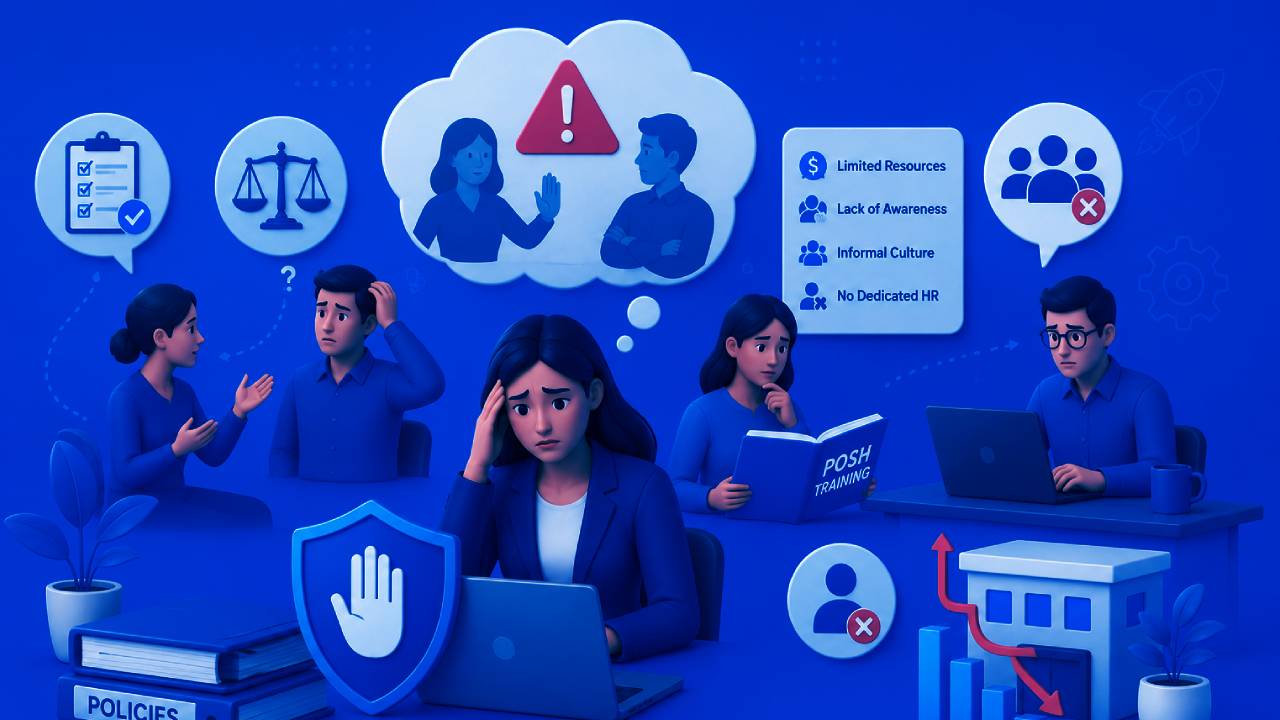
Building a successful startup requires innovation, speed, and strong team collaboration. However, many growing companies overlook an equally important responsibility which is workplace safety and legal compliance. Startup POSH Compliance has become a major concern for small businesses across India as organisations face increasing legal expectations under the Prevention of Sexual Harassment Act, 2013.
Startups often operate with lean teams, informal communication structures, and limited HR resources. While such flexibility supports business growth, it can also create serious compliance gaps if workplace conduct policies are ignored. Many founders assume POSH requirements apply only to large corporations, but the law extends to startups and small businesses as well.
This article explains the major POSH compliance challenges startups face, why small businesses remain vulnerable to legal risks, and how organisations can strengthen workplace safety while maintaining operational agility.
Understanding Startup POSH Compliance
The POSH Act requires every employer to create a safe workplace free from sexual harassment. Any organisation employing ten or more workers must establish an Internal Committee to handle complaints related to workplace harassment. The law applies broadly across industries, including startups, technology companies, consulting firms, retail businesses, agencies, and remote workplaces. It also covers interns, contractual staff, consultants, and temporary workers. Startup founders often prioritise fundraising, hiring, product development, and expansion. Workplace compliance frequently receives less attention during early growth stages. Unfortunately, delayed compliance can create serious operational and reputational consequences later. Small businesses must understand POSH compliance is not merely a legal obligation. It also protects workplace culture, employee trust, and long term organisational credibility.
Why Startups Struggle With POSH Compliance
Startups face unique operational challenges which make compliance more complicated compared to larger organisations with dedicated HR and legal departments.
1. Limited Human Resource Infrastructure
Many startups operate without formal HR teams during initial stages. Recruitment, employee relations, and policy management are often handled directly by founders or operations staff. As a result, workplace compliance processes may remain incomplete or inconsistent. Without structured HR systems, employees may also remain unaware of reporting procedures or workplace conduct expectations.
2. Informal Work Culture
Startup environments usually encourage open communication, relaxed hierarchies, and casual workplace interactions. While such culture can improve collaboration, it may also blur professional boundaries. Employees sometimes struggle to differentiate between friendly behaviour and inappropriate conduct. Informal communication channels can increase the possibility of misunderstandings or complaints.
3. Lack of Legal Awareness
Many founders remain unaware of specific obligations under the POSH Act. Some businesses incorrectly assume compliance becomes necessary only after receiving a complaint. In reality, employers must proactively establish preventive systems before workplace issues arise.
4. Budget Constraints
Startups frequently focus on cost management. Compliance training, legal consultation, and policy development may appear secondary compared to operational priorities. However, avoiding compliance investments often increases long term legal and reputational exposure.
5. High Employee Turnover
Growing startups experience continuous hiring cycles. Frequent onboarding creates challenges in maintaining consistent awareness across teams. Without regular training sessions, new employees may never receive proper workplace conduct guidance.
Legal Responsibilities of Small Businesses Under the POSH Act
The POSH Act imposes several responsibilities on employers regardless of company size once legal thresholds apply. Organisations employing ten or more individuals must establish an Internal Committee with the required composition. Employers must also create written workplace harassment policies and conduct awareness programmes regularly. Companies must display policy information prominently, support fair inquiry procedures, maintain confidentiality, and submit annual compliance reports where applicable. Failure to meet these obligations may result in financial penalties, reputational damage, and increased legal scrutiny. Startups often underestimate how seriously authorities and courts treat workplace safety compliance today.
The Risk of Delayed POSH Implementation
Many startups postpone compliance until employee strength increases significantly or until operational systems mature. This approach creates unnecessary risk. A single complaint can expose organisational weaknesses quickly. If a company lacks policies, training records, or Internal Committee structures, legal defence becomes difficult. Delayed implementation also damages employee confidence. Team members may hesitate to report concerns if organisations appear unprepared to handle complaints responsibly. Investors and business partners increasingly evaluate governance practices before engaging with startups. Poor compliance standards can therefore affect funding opportunities and business reputation.
Why Workplace Culture Matters in Startups
Startup culture strongly influences employee behaviour. Founders and senior teams set communication standards through daily interactions. Employees closely observe leadership conduct. Casual comments, inappropriate humour, unclear boundaries, or dismissive responses towards concerns can normalise problematic behaviour unintentionally. Strong workplace culture begins with clear expectations. Employees should understand professional behaviour standards from the beginning of their employment. Regular awareness discussions help create accountability across teams. Startups which establish respectful communication early often avoid larger workplace conflicts later.Many growing organisations now prioritise POSH training for startups to strengthen employee awareness during rapid expansion phases.
Challenges in Forming an Internal Committee
One of the most difficult compliance requirements for startups involves forming an Internal Committee. Small organisations may struggle to identify eligible senior employees with sufficient neutrality and experience. Startups with closely connected teams may also face concerns regarding confidentiality and bias during complaint investigations. The law requires inclusion of an external member familiar with workplace harassment issues. Many startups remain unaware of this requirement or delay appointing qualified external professionals. Without a properly structured committee, complaint handling processes may become legally vulnerable.
Remote and Hybrid Work Complications
Modern startups increasingly operate through hybrid or remote models. While flexible work arrangements improve operational efficiency, they also introduce new compliance risks. Digital communication platforms often create informal interaction patterns. Employees may communicate through chats, messaging applications, or virtual meetings without clear behavioural guidelines. Remote work also makes complaint management more complicated. Evidence collection, confidentiality protection, and witness coordination become more difficult in distributed work environments. Startups must update workplace policies to include virtual conduct expectations and remote reporting procedures.
Importance of Regular Employee Awareness
Awareness training remains one of the most effective preventive tools for small businesses. Employees should understand what constitutes inappropriate conduct, how complaints are handled, and what protections exist under workplace policies. Awareness programmes also help employees recognise behavioural boundaries during informal workplace interactions. Training should not remain limited to female employees. Every worker, including leadership teams and contractual staff, should participate. Frequent refresher sessions become especially important for startups experiencing rapid growth or organisational restructuring. Many businesses combine compliance education with broader corporate training services to strengthen workplace professionalism and communication standards simultaneously.
Common POSH Compliance Mistakes Startups Make
Several recurring mistakes weaken compliance efforts in small organisations. Some startups copy generic workplace policies without customising them according to operational realities. Others create policies but never communicate them effectively to employees. Another common issue involves treating complaints informally. Founders sometimes attempt private resolution without following proper inquiry procedures, increasing legal risk significantly. Poor documentation is another serious concern. Organisations must maintain records of policies, training sessions, committee appointments, and complaint handling processes carefully. Ignoring remote employees also creates compliance gaps. Workplace conduct obligations apply equally across physical and digital environments.
How Startups Can Strengthen POSH Compliance
Effective compliance does not require large corporate budgets. Small businesses can build strong workplace safety systems through practical and consistent measures. Clear written policies should define acceptable conduct, reporting channels, confidentiality obligations, and investigation procedures. Regular awareness sessions help employees understand workplace expectations clearly. Leadership teams should actively support compliance efforts rather than delegating responsibility entirely to HR personnel. Internal Committees should receive specialised training on inquiry management and documentation practices. Startups should also encourage open communication cultures where employees feel comfortable reporting concerns without fear of retaliation. Seeking periodic legal guidance can help businesses identify compliance gaps before serious issues arise.
The Business Value of Strong POSH Compliance
Many startups view compliance only as a legal necessity. In reality, workplace safety directly influences organisational growth and stability. Employees perform better in respectful and psychologically secure environments. Strong workplace culture improves retention, collaboration, and employee trust. Investors increasingly assess governance practices during funding evaluations. Proper compliance frameworks demonstrate operational maturity and leadership accountability. Customers and business partners also prefer organisations with responsible workplace practices. Ultimately, effective compliance strengthens both legal protection and long term business credibility.
Conclusion
Startup POSH Compliance is no longer optional for modern businesses. As workplaces evolve rapidly, startups must balance flexibility and innovation with legal accountability and employee safety. Small businesses face unique challenges involving limited resources, informal culture, remote work, and rapid hiring. However, delaying compliance creates significant operational and reputational risks. Strong workplace policies, regular awareness programmes, leadership involvement, and properly structured complaint mechanisms help organisations build safer and more professional work environments.Startups which invest in compliance early often create healthier organisational cultures capable of supporting sustainable long term growth.