
Precision in Every Line Crafting Contracts, Perfecting Agreements
Our Range of Solutions :
Contract Drafting
Crafting the perfect contract is an art, and our team of experienced legal professionals are the artists. We begin by thoroughly understanding your objectives and tailoring every clause to align with your specific needs with clear & understandable language. While we have described several types of legal contract drafting services, we have plethora of ready to use templates ranging from a simple business agreement to a complex commercial contract that can be modified to provide clear, comprehensive and customized clauses as per the requirements.
Contract Vetting :
Contracts can be laden with risks and uncertainties. Our contract vetting service is designed to protect your interests. We meticulously review every contract to make sure that it is fair, legally sounds, aligns with commercial requirement and is in sync with your interests and objectives. We aim to minimize the potential risks as your business need is our top priority.Contract Redlining:
Negotiating contracts is often a back-and-forth process. Our redlining service ensures that you have the upper hand in negotiations. We help you mark-up contracts to reflect your preferences and proposed changes, making it easier to reach mutually beneficial agreements with your counterparts. Don’t leave your contracts to chance. Whether you’re a startup, a growing business, or an established corporation, Lexlevel is your trusted partner for contract drafting, vetting, and redlining. Contact us today to discuss your contract needs and take the first step toward secure and successful business agreements.Frequently Asked Questions (Contract Drafting, Vetting, and Redlining)
1. What is contract drafting, vetting, and redlining?
Contract drafting, vetting, and redlining are processes used to create, review, and revise legal agreements. Drafting involves preparing the contract, vetting focuses on analysing legal and commercial risks, and redlining involves marking proposed changes to contractual terms before finalisation and execution.
2. Why is professional contract drafting important for businesses?
Professional contract drafting helps ensure that agreements clearly define rights, obligations, payment terms, liabilities, and dispute resolution mechanisms. Well drafted contracts reduce ambiguity, improve enforceability, and help businesses manage legal and commercial risks more effectively throughout the contractual relationship.
3. What does contract vetting involve?
Contract vetting involves reviewing an agreement to identify legal risks, unclear provisions, inconsistent clauses, compliance concerns, and obligations that may affect a party’s interests. The review process helps stakeholders understand the contract before signing and supports informed decision making.
4. What is contract redlining, and why is it used?
Contract redlining is the process of proposing, tracking, and reviewing changes within a contract during negotiations. Redlining helps parties compare revisions, discuss modifications, and reach mutually acceptable terms while maintaining transparency throughout the contract negotiation process.
5. When should a contract be vetted before signing?
A contract should generally be vetted before execution whenever it involves significant financial commitments, long term obligations, intellectual property rights, confidentiality requirements, service arrangements, or potential legal risks. Early review helps identify concerns before the agreement becomes legally binding.
6. Which types of contracts commonly require drafting, vetting, and redlining?
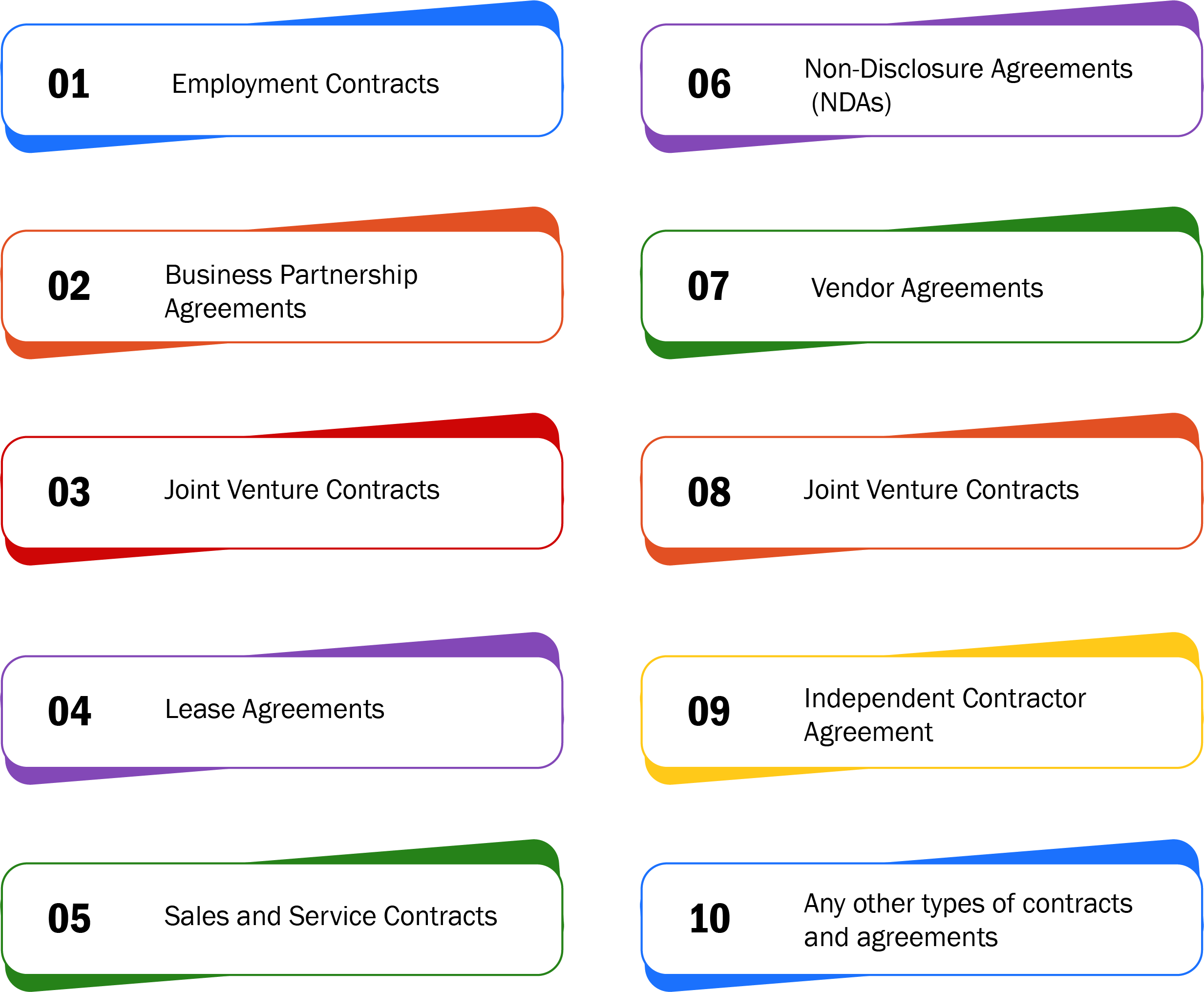
These services are commonly used for employment agreements, service contracts, vendor agreements, partnership agreements, shareholder agreements, lease agreements, licensing arrangements, confidentiality agreements, procurement contracts, and other commercial documents involving legal rights and obligations.
7. What information is typically needed for contract drafting?
Contract drafting generally requires details about the parties, transaction objectives, scope of services, payment terms, timelines, obligations, confidentiality requirements, intellectual property provisions where applicable, and any other agreed commercial terms relevant to the proposed relationship.
8. How can contract vetting help reduce business risks?
Contract vetting helps reduce business risks by identifying unfavourable clauses, excessive liabilities, unclear obligations, compliance concerns, and contractual inconsistencies. Understanding these issues before execution allows parties to negotiate terms more effectively and avoid potential disputes later.
9. What are the common mistakes businesses make when reviewing contracts?
Common mistakes include relying on generic templates, overlooking termination provisions, failing to review liability clauses, ignoring renewal terms, misunderstanding payment obligations, and signing agreements without proper evaluation. Careful review helps ensure that contractual commitments are clearly understood.
10. Can a contract be modified after redlining discussions?
Yes. Contracts can generally be modified during negotiations if all parties agree to the proposed revisions. Changes should be documented clearly, reviewed carefully, and incorporated into the final version before execution to ensure accuracy and consistency throughout the agreement.
11. How does contract drafting support regulatory and compliance requirements?
Contract drafting supports compliance by incorporating legally required provisions, defining responsibilities, documenting obligations, and aligning contractual terms with applicable laws and regulations. Requirements may vary depending on the industry, jurisdiction, and nature of the business relationship.
12. What should businesses consider when choosing a contract drafting and review service provider?
Businesses should consider the provider’s experience, understanding of commercial transactions, contract review processes, industry knowledge, attention to detail, and ability to identify legal and operational risks. A structured approach helps ensure that contracts accurately reflect business objectives and contractual requirements.