
Expert Legal Proofreading Services
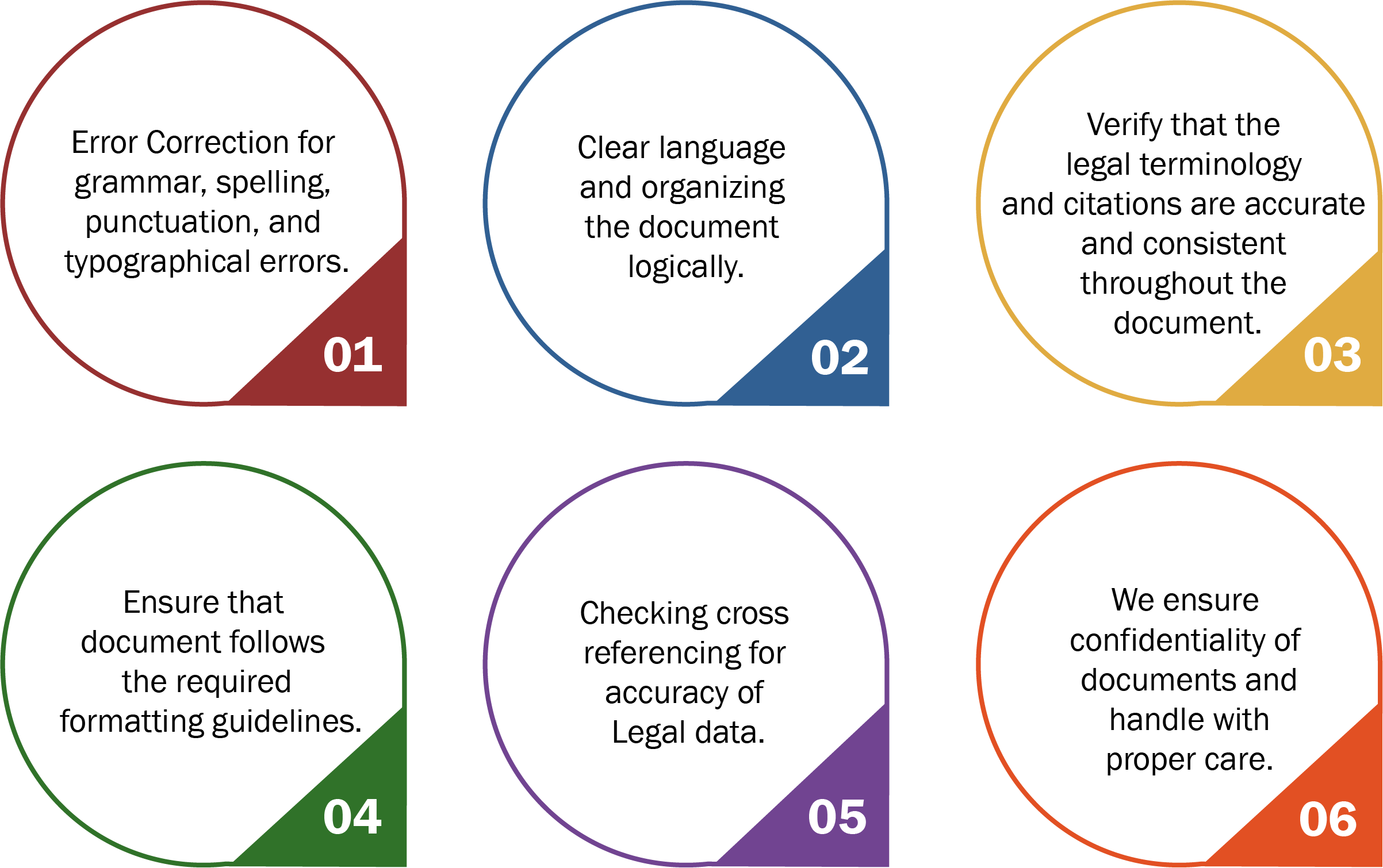
Our Proofreading services provide a range of solutions :
Frequently Asked Questions (FAQs)
1. What is legal proofreading, and why is it important?
Legal proofreading is the process of reviewing legal documents for grammar, spelling, punctuation, formatting, numbering, cross references, and consistency errors. It is important because even minor mistakes in legal documents can create confusion, affect interpretation, and reduce the overall quality and professionalism of the document.
2. What types of documents can be reviewed through legal proofreading?
Legal proofreading can be applied to contracts, agreements, pleadings, legal notices, policies, compliance documents, corporate records, legal opinions, court submissions, and other legal materials. The objective is to ensure accuracy, consistency, and readability before the document is finalised or submitted.
3. How is legal proofreading different from legal drafting or legal review?
Legal proofreading focuses on correcting language, formatting, citation, and consistency issues. Legal drafting involves creating legal documents, while legal review typically examines legal rights, obligations, risks, and enforceability. Proofreading is generally the final quality control step before document completion.
4. When should a legal document be proofread?
A legal document should ideally be proofread after drafting and substantive review have been completed. Conducting proofreading at the final stage helps identify overlooked errors and ensures the document is accurate, consistent, and ready for execution, filing, publication, or distribution.
5. What common errors are identified during legal proofreading?
Common errors include typographical mistakes, incorrect numbering, inconsistent terminology, citation errors, formatting issues, missing references, punctuation mistakes, and discrepancies between clauses. Identifying these issues helps improve document clarity and reduces the likelihood of misunderstandings.
6. Can legal proofreading help improve contract accuracy?
Yes. Legal proofreading can improve contract accuracy by identifying inconsistencies, incorrect cross references, duplicated clauses, formatting errors, and language issues. While proofreading does not replace legal review, it helps ensure that the final document is internally consistent and professionally presented.
7. Why is consistency important in legal documents?
Consistency is important because legal documents often contain defined terms, references, dates, and obligations that must align throughout the text. Inconsistent language or formatting can create confusion and may affect how a document is interpreted by parties, regulators, or courts.
8. What information is needed to start a legal proofreading project?
The primary requirement is the document that needs proofreading. Additional information may include formatting preferences, style guidelines, jurisdictional requirements, citation standards, and any previous versions of the document. Providing clear instructions helps ensure a more accurate review process.
9. Can legal proofreading identify compliance related issues?
Legal proofreading may identify obvious inconsistencies or missing references related to compliance documents. However, compliance assessments generally require a separate legal or regulatory review. The role of proofreading is primarily to improve accuracy, consistency, readability, and document presentation.
10. What are the risks of submitting a legal document without proofreading?
Submitting a legal document without proofreading may result in typographical errors, incorrect references, inconsistent clauses, formatting problems, and unclear language. These issues can affect credibility, create confusion, and increase the likelihood of administrative corrections or document revisions.
11. Is legal proofreading useful for businesses and startups?
Yes. Legal proofreading can be valuable for businesses and startups that regularly use contracts, policies, employment documents, compliance records, and commercial agreements. Reviewing documents before use helps maintain accuracy, consistency, and professional standards across legal communications.
12. What should I consider when choosing a legal proofreading service?
You should consider experience with legal documentation, attention to detail, familiarity with legal terminology, understanding of citation and formatting standards, and quality assurance processes. A thorough proofreading process helps ensure that legal documents are clear, consistent, and free from avoidable errors.