Contract Redaction

Protect sensitive information, Personally Identifiable Information (PII) and comply with data protection laws (GDPR, CCPA, HIPPA).

What is Contract Redaction?

It is the process of editing , blocking out or removing certain portions of a contract or legal document to protect sensitive or confidential information while still maintaining the document’s essential terms and conditions. Redaction is typically performed to ensure that only authorized individuals have access to specific details within a contract, such as personal identifying information (PII), financial data, trade secrets, proprietary information, etc. It is necessary to restrict public access to personal data, given the possibility of identity theft and other types of fraud. Example of information that can be redacted are:
  • Medical Records
  • Trade Secrets
  • Social security information
  • Financial account numbers
  • Names, Address, Date of Birth, phone etc
  • PHI & Medical records – mandated by HIPPA
  • Proprietary records
  • Judiciary records
  • License numbers

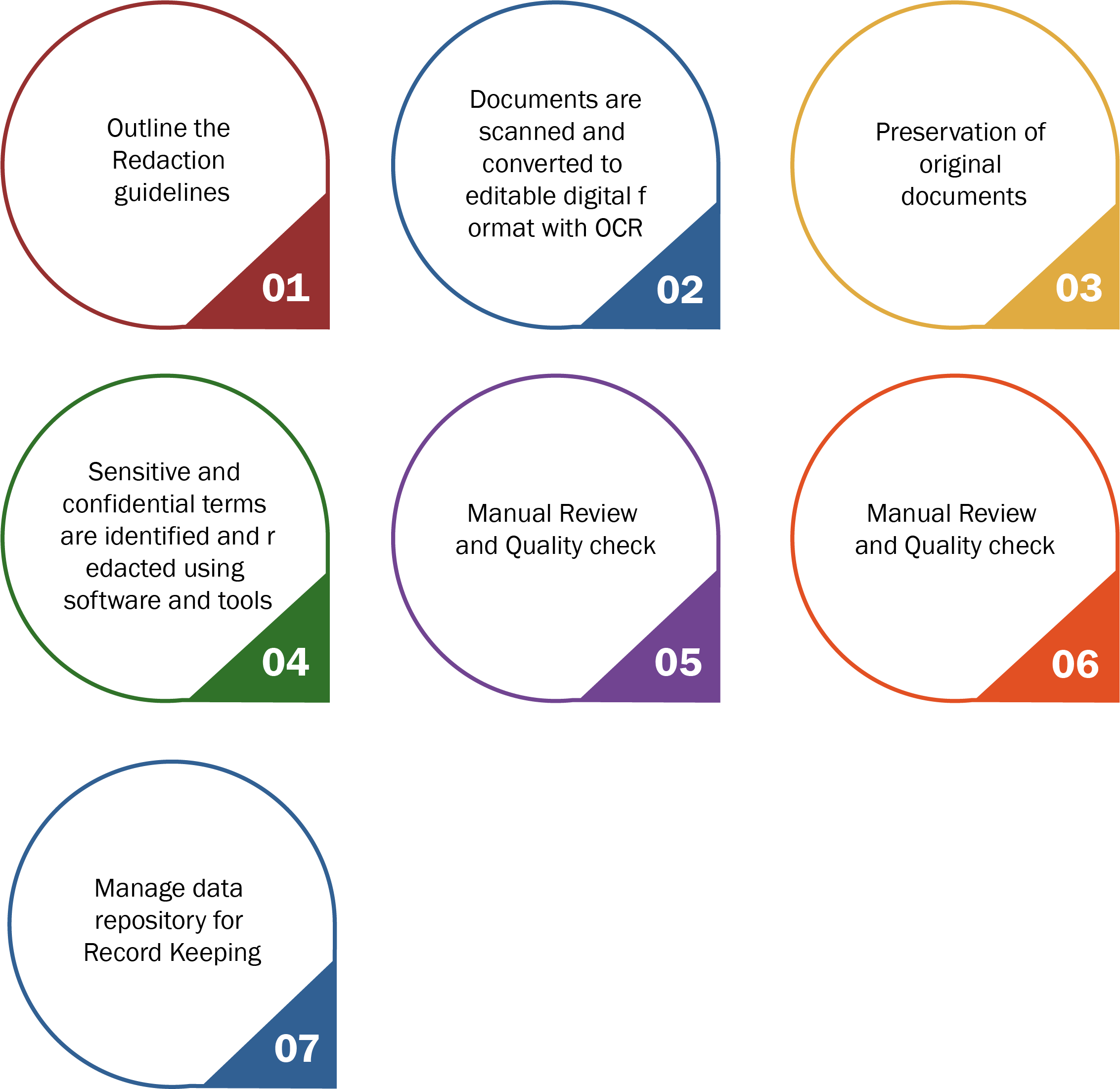
How does it work?

Contract-Redaction

How does this partnership benefit you? We would deliver

  • Consistency and Risk reduction
  • Ability to work with Multiple document format
  • Maximized Security
  • Compliance with regulatory laws
  • Tracking & Reporting of Redacted terms
  • Reduced cost
  • High Accuracy rate
  • Flexible brief as per business/case requirements

Frequently Asked Questions for Contract Redaction -

1. What is contract redaction?

Contract redaction is the process of removing, masking, or obscuring sensitive information from a contract before it is shared, disclosed, or reviewed by third parties. This helps protect confidential business information, personal data, trade secrets, and commercially sensitive terms while allowing the remaining content to be accessed when necessary.

Contract redaction is important because it helps organisations protect confidential information from unauthorised disclosure. Proper redaction reduces privacy risks, safeguards sensitive commercial data, supports regulatory compliance, and enables businesses to share contractual documents without exposing protected information.

Commonly redacted information includes personal identifiers, financial details, pricing information, confidential business data, proprietary processes, trade secrets, customer information, bank account details, and commercially sensitive clauses. The information selected for redaction depends on legal, regulatory, and business requirements.

A contract should be considered for redaction before being shared with external parties, auditors, regulators, investors, consultants, or during due diligence exercises when confidential information is not required for the specific purpose of disclosure. The scope of redaction depends on the circumstances involved.

Contract redaction focuses on removing or concealing sensitive information, while contract abstraction involves summarising and extracting key contractual terms. Although both processes are used in contract management, they serve different objectives and may be performed independently or together.

Yes. Contract redaction can support data privacy compliance by limiting access to personal information and sensitive business data. Organisations often use redaction practices to reduce unnecessary disclosure risks and align document sharing processes with applicable privacy and confidentiality obligations.

Improper contract redaction can result in accidental disclosure of confidential information, privacy breaches, reputational damage, contractual disputes, and compliance concerns. Organisations should ensure that sensitive information is fully removed or concealed before documents are distributed or shared externally.

Contract redaction is commonly used in legal services, healthcare, financial services, insurance, technology, government contracting, manufacturing, and other industries that handle sensitive personal, commercial, or regulatory information. The need for redaction depends on the nature of the contractual data involved.

Yes. A redacted contract can remain useful for review, auditing, compliance checks, due diligence, and information sharing purposes, provided that the redactions do not remove information essential to understanding the document’s intended purpose. Requirements may vary depending on the situation.

Organisations should review the original contract, amendments, schedules, annexures, confidentiality obligations, and any relevant data protection requirements. Understanding the purpose of disclosure helps determine which information should remain visible and which details may require redaction.

Common mistakes include incomplete redaction, overlooking metadata, using ineffective redaction tools, removing necessary information, and failing to review the final document before sharing. A careful review process helps ensure that confidential information is properly protected and disclosure risks are minimised.

Organisations should consider the provider’s experience, confidentiality practices, document handling procedures, quality control measures, understanding of privacy obligations, and ability to identify sensitive contractual information accurately. A structured redaction process helps maintain document integrity while protecting confidential information.