
Contract Lifecycle Management

STRATERGIZE. OPTIMIZE. ACTUALIZE. CONTRACTING MADE EASY– MANAGE & CONTROL YOUR DOCUMENTS FROM ANYWHERE AND ANYTIME.

About 80 – 90% of document bulk comprises of contracts made with customers, vendors, partners, or employees at every stage of the business cycle. Without a proper system or management process it can make tracking, storing, renewal and execution a mammoth and a challenging task.

What is Contract Management?

It is the process of digitally managing agreements and contracts at every stage of document lifecycle. It will enable you to have all your contracts in one place which can be accessed from anywhere. With our innovative digitization, you will get automatically notified of key dates and tasks, the stage of the contract, parties involved and help you uncover insights about the financial and compliance health.

The automation of managing contracts will warrant –
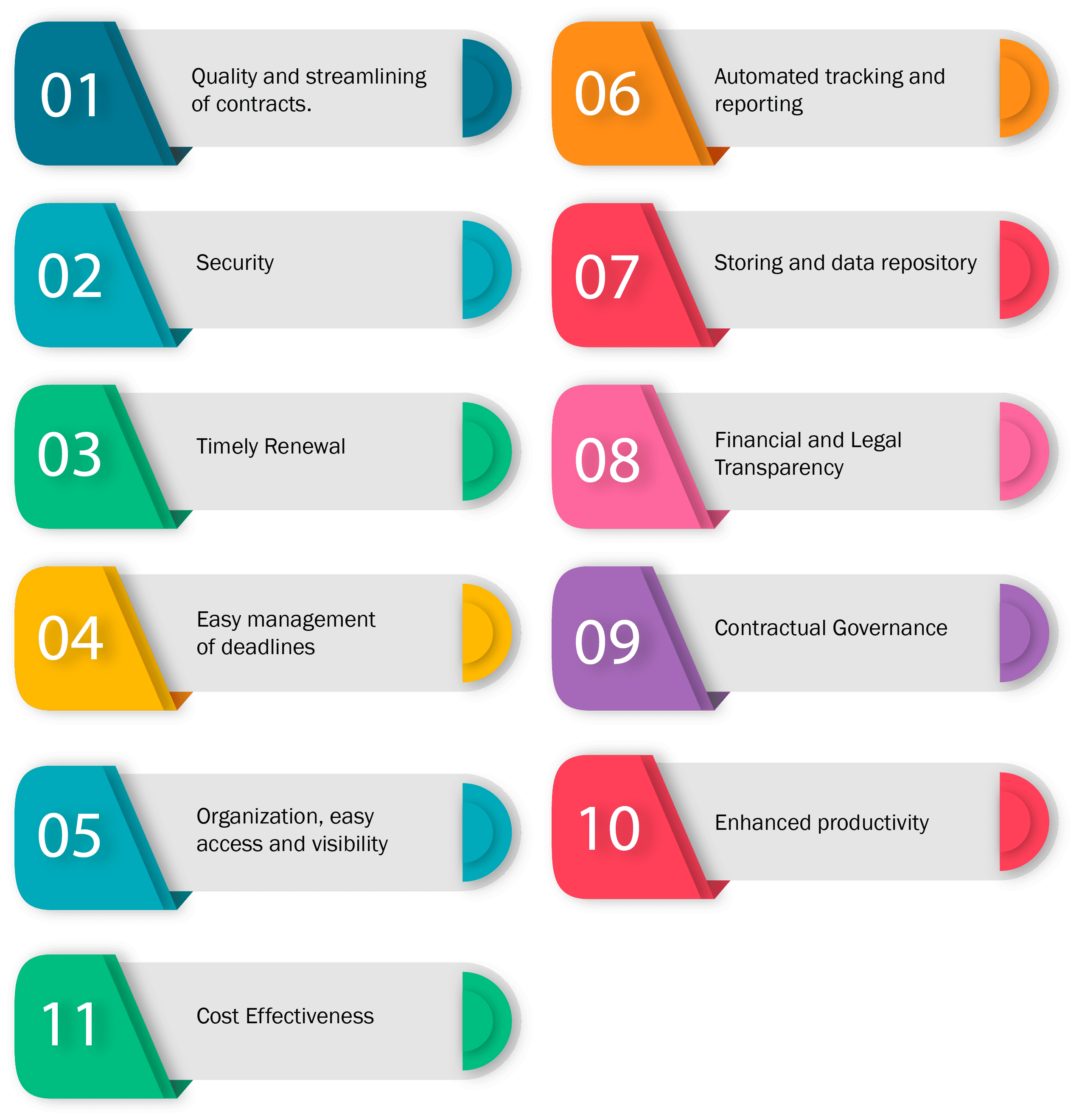
Contract Lifecycle

ARE YOU READY TO TAKE CONTROL AND SAFEGUARD YOURSELF AGAINST COMPLIANCE FAILURE, POOR REPORTING, MISSED DEADLINES & UNNECESSARY COSTS ?

  • Disorganized and inconsistent contract management results in loss of vital information leading to devastating financial loss.
  • Your time spent on searching for templates, terms and conditions, clauses, and definitions, decreases your productivity and leads to legal delays.
  • Missing deadlines and obligations would set you back big time damaging your goodwill and reputation.

Frequently Asked Questions (CLM)

1. What is Contract Lifecycle Management (CLM)?

Contract Lifecycle Management is the process of managing a contract from its creation and negotiation through execution, performance monitoring, renewal, amendment, and termination. A structured CLM process helps organisations maintain contract visibility, improve compliance, reduce risks, and manage contractual obligations more effectively throughout the agreement’s lifecycle.

Contract Lifecycle Management is important because it helps organisations track obligations, manage deadlines, monitor performance, and maintain compliance with contractual requirements. Effective contract management can reduce administrative inefficiencies, minimise legal risks, and support better decision making across business operations.

The contract lifecycle generally includes contract request, drafting, review, negotiation, approval, execution, storage, performance monitoring, amendment, renewal, and termination. The exact stages may vary depending on the organisation, industry requirements, and the complexity of the contractual relationship.

Businesses of all sizes can benefit from Contract Lifecycle Management. Startups, small businesses, large corporations, non profit organisations, and government contractors often use CLM processes to manage vendor agreements, customer contracts, employment agreements, and other commercial arrangements efficiently.

Contract Lifecycle Management helps reduce risks by improving contract visibility, monitoring obligations, tracking key dates, maintaining documentation, and identifying potential compliance issues. A structured process enables organisations to address concerns proactively and reduce the likelihood of disputes arising from overlooked contractual requirements.

A CLM process can manage various documents, including service agreements, vendor contracts, employment agreements, confidentiality agreements, licensing contracts, partnership agreements, lease agreements, procurement contracts, and customer agreements. The specific documents depend on the organisation’s operational and commercial activities.

Businesses can track renewal and expiration dates through organised contract repositories, monitoring systems, reminder mechanisms, and regular contract reviews. Effective tracking helps organisations avoid missed deadlines, maintain continuity of business relationships, and make informed decisions regarding renewals or contract modifications.

Yes. Contracts can generally be amended when all parties agree to the proposed changes and the amendments are documented appropriately. The amendment process should comply with the terms of the original agreement and any applicable legal requirements governing contractual modifications.

Common challenges include decentralised contract storage, missed deadlines, inadequate documentation, poor version control, inconsistent approval processes, and insufficient monitoring of contractual obligations. Addressing these challenges helps organisations improve contract governance and maintain greater control over contractual relationships.

Contract Lifecycle Management supports compliance by maintaining organised records, tracking contractual obligations, documenting approvals, and facilitating audits. Effective management processes help organisations demonstrate adherence to contractual and regulatory requirements while improving accountability and governance practices.

Organisations should evaluate their contract volume, existing workflows, approval procedures, compliance obligations, document management practices, and reporting needs. Understanding these factors helps create a contract management framework that aligns with business objectives and operational requirements.

After termination or expiration, organisations should retain relevant records, review outstanding obligations, manage document retention requirements, and confirm that contractual responsibilities have been fulfilled. Post contract management practices may vary depending on the agreement terms, applicable laws, and organisational policies.