
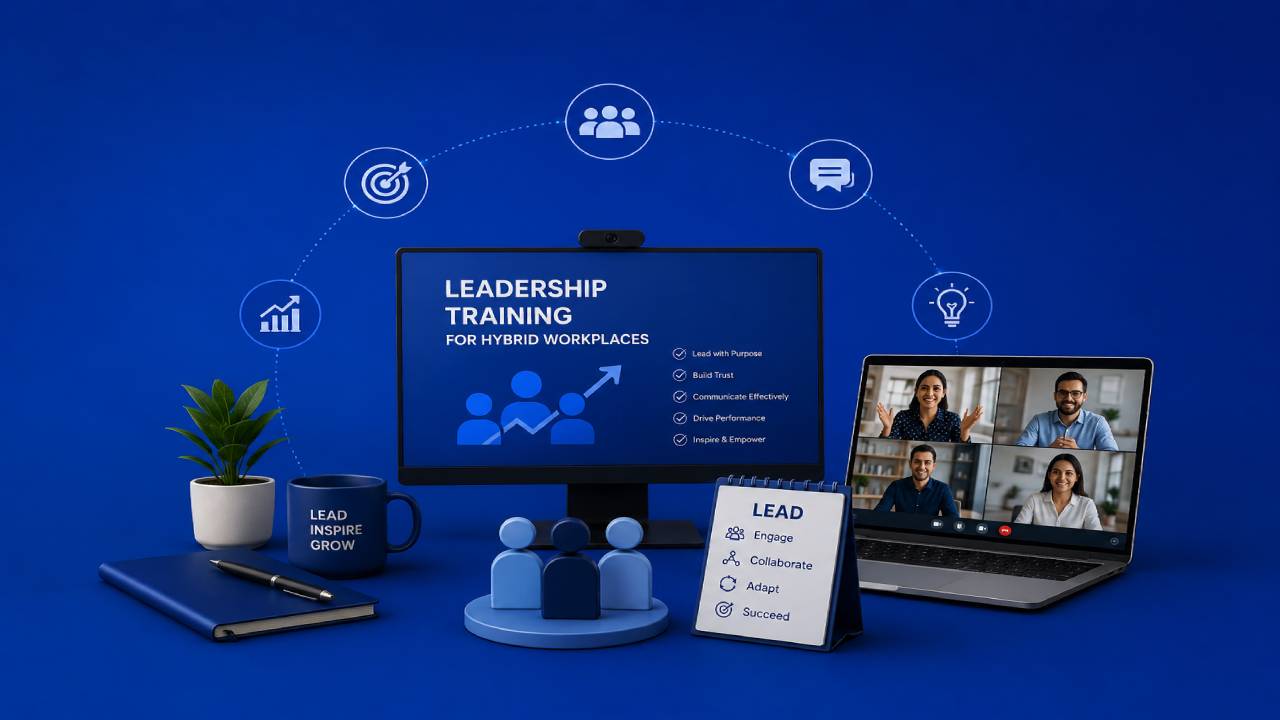
The rise of hybrid work models has transformed the way organisations operate. As employees split their time between in-office and remote work, leaders face new challenges in managing teams, maintaining engagement, and driving productivity. This shift has made Leadership training hybrid workplaces a crucial component of organisational success. Companies increasingly recognise the need to equip managers with the skills to navigate these complex environments effectively.
Hybrid workplaces demand leaders who can foster collaboration across physical and digital spaces, adapt to diverse work styles, and maintain a culture of accountability and trust. Leadership training in this context focuses on building competencies such as remote communication, virtual team management, emotional intelligence, and strategic decision-making. Organisations that invest in such training enhance overall workforce performance while preparing leaders for the evolving business landscape.
This article explores the key aspects, benefits, and best practices of leadership training designed specifically for hybrid workplaces.
Leadership training hybrid workplaces: What it entails
Leadership training for hybrid work models aims to equip leaders with the skills to manage distributed teams effectively. Unlike traditional office settings, hybrid workplaces require leaders to balance in-person interactions with virtual collaboration. Training programmes focus on developing capabilities that enable leaders to maintain alignment, motivation, and engagement across diverse work settings.
Hybrid leadership training often includes modules on virtual communication strategies, remote performance management, digital collaboration tools, and fostering a cohesive team culture. Participants learn how to create inclusive environments where all team members, regardless of location, feel valued and heard. Moreover, training programmes emphasise agility and adaptability, helping leaders respond to changing circumstances, shifting priorities, and technological challenges in hybrid work environments. These competencies ensure leaders can drive results while maintaining team morale and productivity.
Key challenges in hybrid workplaces
Effective leadership in hybrid environments requires understanding the unique challenges of managing distributed teams. One major challenge is maintaining clear and consistent communication. Remote team members may miss informal updates that in-office employees receive, which can affect alignment and decision-making. Another challenge involves fostering team cohesion. Hybrid teams often experience reduced interpersonal interaction, which can impact collaboration, trust, and innovation. Leaders need strategies to encourage engagement and build relationships across both remote and on-site team members. Performance management also becomes complex in hybrid settings. Monitoring productivity, providing timely feedback, and recognising contributions require leaders to adopt digital tools and adapt traditional management practices.
Finally, hybrid workplaces can increase the risk of burnout or disengagement if employees feel isolated or disconnected from organisational goals. Leadership training addresses these risks by teaching managers how to support employee wellbeing and maintain motivation across all work settings.
Benefits of leadership training in hybrid environments
Investing in leadership training for hybrid workplaces provides several tangible benefits for organisations. First, it enhances managerial effectiveness. Leaders gain skills to communicate clearly, set expectations, and monitor performance regardless of location. Second, it promotes employee engagement. Training helps leaders create inclusive work environments, encouraging participation and collaboration from all team members. Employees feel more connected to organisational goals and valued in their roles. Third, hybrid leadership training improves productivity. By developing strategies for task prioritisation, remote collaboration, and goal tracking, leaders ensure their teams remain focused and efficient.
Fourth, it strengthens organisational culture. Leaders trained in hybrid management can preserve company values and foster cohesion across physical and virtual workspaces. Finally, leadership training builds resilience. Leaders equipped to handle the challenges of hybrid work can adapt quickly to change, manage uncertainty, and guide their teams effectively through evolving business landscapes.
Core components of hybrid leadership training
Effective leadership training for hybrid workplaces incorporates several essential components. Virtual communication and collaboration: Leaders learn to use digital tools effectively, communicate expectations clearly, and foster collaboration among remote and on-site team members. Emotional intelligence and empathy: Training focuses on recognising and responding to the emotional needs of team members, ensuring leaders can maintain engagement and morale.
Performance management: Leaders are taught techniques to monitor productivity, provide constructive feedback, and measure team outcomes in hybrid environments. Building trust and accountability: Leaders learn strategies to cultivate trust, delegate responsibilities, and hold team members accountable while respecting autonomy. Inclusivity and team cohesion: Training addresses methods to create an inclusive culture where all employees feel valued and included, regardless of their work location. Change management and adaptability: Leaders develop skills to navigate shifting priorities, technological changes, and evolving team dynamics.
Selecting the right leadership training approach
Organisations have multiple options when implementing hybrid leadership training. Some may choose internal programmes facilitated by experienced managers or human resource teams. Others engage external providers with specialised expertise in leadership development. Engaging professional trainers ensures access to structured learning methodologies, best practices, and industry insights. External providers also offer tools and resources to simulate hybrid scenarios, helping leaders practise and refine their skills. Organisations seeking comprehensive programmes often combine internal and external approaches, ensuring training aligns with company culture while incorporating advanced techniques from industry experts.
Many organisations invest in leadership skills training for employers to ensure leaders are well-equipped to manage hybrid teams effectively. These programmes focus on practical application, scenario-based learning, and ongoing skill reinforcement to maximise leadership impact.
Best practices for hybrid leadership training
To achieve the best outcomes, leadership training programmes for hybrid workplaces should follow several key practices.
- First, training should be interactive and experiential. Leaders benefit most from scenario-based exercises, role-playing, and virtual simulations that mirror real-world hybrid challenges.
- Second, programmes should be tailored to organisational needs. Training content must reflect company culture, operational realities, and team structures to ensure relevance and applicability.
- Third, training should include ongoing support. Follow-up sessions, coaching, and mentoring help leaders reinforce learning and adapt skills to evolving work conditions.
- Fourth, training should integrate digital tools effectively. Leaders must gain proficiency in communication platforms, project management software, and collaboration applications.
- Finally, organisations should measure training effectiveness. Feedback surveys, performance metrics, and team outcomes can help assess the impact of leadership development initiatives in hybrid settings.
Future trends in hybrid leadership development
As hybrid work continues to evolve, leadership training will increasingly emphasise agility, digital fluency, and emotional intelligence. Programmes will integrate advanced technologies such as AI-driven learning platforms, virtual simulations, and real-time performance analytics. Leaders will be expected to cultivate inclusive cultures, manage distributed teams seamlessly, and adapt quickly to shifting business priorities. Organisations that prioritise corporate training solutions for hybrid leadership will gain a competitive advantage by fostering resilient, skilled, and adaptable leaders.
Conclusion
Leadership training for hybrid workplaces is essential in today’s dynamic work environment. With employees distributed across offices and remote locations, organisations must equip leaders with the skills to manage, engage, and inspire their teams effectively. Hybrid leadership programmes focus on communication, emotional intelligence, performance management, and inclusivity. They help leaders build trust, maintain productivity, and reinforce organisational culture in diverse work settings. By investing in targeted training, organisations strengthen their leadership pipeline, improve employee engagement, and ensure long-term success in hybrid work models.