
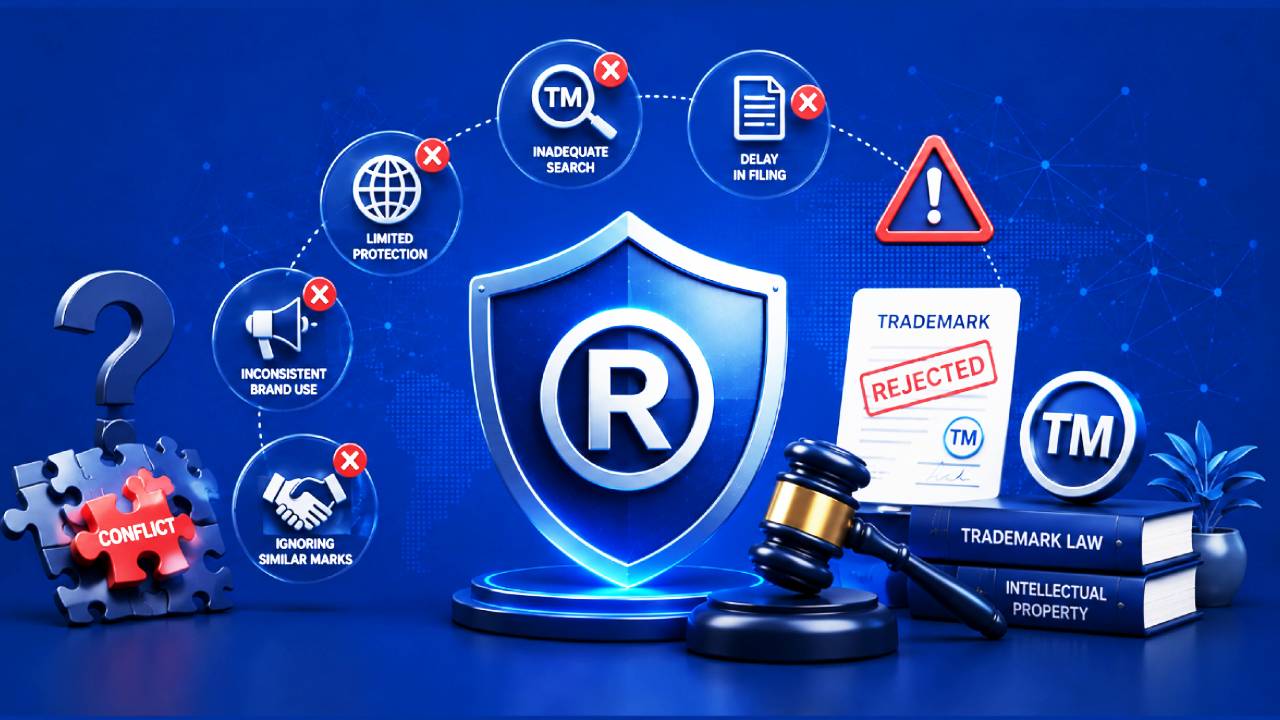
Brand Protection Mistakes are one of the most overlooked risks for growing businesses in India. Many companies focus heavily on marketing, product development, and scaling operations, but ignore early legal safeguards around brand identity. This often leads to trademark disputes, rebranding costs, and even loss of market reputation. Understanding Brand Protection Mistakes early helps businesses avoid legal conflicts and secure long term ownership of their brand identity. In a competitive market, trademarks are not just legal tools. They are core business assets. When ignored or delayed, they expose companies to preventable disputes and financial losses. This article explains the most common errors businesses make and how these mistakes escalate into serious trademark conflicts.
Brand Protection Mistakes
One of the most critical Brand Protection Mistakes is assuming a business name or logo is automatically safe to use once it is available online or registered as a domain. Many founders skip proper trademark clearance searches and unknowingly adopt names already in use by other businesses. Another frequent mistake is delaying trademark registration. Startups often wait until they scale before securing their brand legally. During this gap, competitors or unrelated businesses may register similar marks, creating ownership conflicts and legal barriers. Some businesses also fail to understand class based protection. A trademark registered in one category does not automatically protect it across all industries. This misunderstanding leads to overlap disputes when companies expand into new markets. Inconsistent brand usage across platforms is another issue. Variations in spelling, logo design, or product naming weaken legal protection and make enforcement difficult during disputes. Proper legal guidance from a trademark filing lawyer helps prevent these issues by ensuring correct classification, proper searches, and timely registration.
Ignoring Comprehensive Trademark Searches
One of the most damaging Brand Protection Mistakes is skipping a detailed trademark search before launching a brand. Many entrepreneurs rely only on basic internet searches or domain availability checks. This is not enough. A proper search includes registered trademarks, pending applications, and phonetic similarities. Without this step, businesses risk unintentional infringement. This often leads to cease and desist notices or forced rebranding after years of brand building. Even small similarities in pronunciation or spelling can create legal conflicts under Indian trademark law. Early diligence prevents costly disputes and protects brand identity from the beginning.
Delaying Trademark Filing After Brand Launch
Another major issue is postponing trademark registration after launching a business. Founders often believe early stage branding does not require legal protection. This delay becomes one of the most expensive Brand Protection Mistakes. During the delay period, competitors may register similar marks or enter the same market using confusingly similar branding. Once this happens, legal ownership becomes harder to establish. Early filing also helps establish priority rights, which play a crucial role in legal disputes. Businesses that register early gain stronger protection and enforcement advantages.
Weak Internal Brand Protection Strategy
Many companies treat trademark protection as a one time task instead of an ongoing strategy. This is a structural Brand Protection Mistakes issue. Brands evolve over time. New products, sub brands, and marketing campaigns introduce new identifiers. If these are not protected properly, businesses create gaps in their legal ownership. A strong brand protection strategy includes monitoring new filings, renewing registrations on time, and protecting digital brand assets. Without this approach, companies become vulnerable to infringement from both competitors and counterfeiters.
Misunderstanding Trademark Classes
Trademark classification errors are another common challenge. Many businesses register their trademark in only one category, assuming it covers all future expansion. This misunderstanding leads to conflicts when companies diversify. For example, a brand registered under software may face issues when launching physical products under the same name. Each class must be carefully selected based on current operations and future growth plans. Proper classification is essential for avoiding legal overlaps and securing expansion rights.
Failure to Monitor Trademark Infringement
Brand monitoring is often ignored after registration. This creates a false sense of security. However, trademark protection is not static. Without monitoring, businesses fail to detect copycat brands, similar logos, or phonetic variations in the market. These infringements dilute brand value and confuse customers. Regular monitoring helps identify threats early and allows timely legal action. Many companies rely on structured monitoring systems supported by intellectual property dispute lawyer in India to maintain brand integrity.
Poor Documentation and Brand Usage Records
Another overlooked issue is lack of proper documentation. Businesses often fail to maintain consistent records of brand usage, advertising history, and commercial evidence. This becomes a serious disadvantage during disputes. Trademark rights are strengthened through continuous and provable usage. Without proper records, proving ownership or first use becomes difficult. This weakens legal standing in opposition or infringement cases.
Not Aligning Brand Protection with Business Growth
As businesses scale, brand complexity increases. New products, markets, and partnerships introduce additional trademark risks. Many companies fail to update their protection strategy accordingly. This disconnect creates gaps between legal protection and business expansion. It often results in partial protection, leaving important brand elements unregistered. A scalable protection strategy ensures every new business move is legally secured from the beginning.
Legal Consequences of Brand Protection Mistakes
The consequences of Brand Protection Mistakes can be severe. Companies may face legal notices, court proceedings, forced rebranding, and financial penalties. In some cases, businesses lose the right to use their own brand name after investing years in building it. This also affects customer trust and market reputation. Legal disputes also consume significant time and resources, diverting focus from core business growth.
Conclusion
Brand Protection Mistakes are not minor oversights. They are strategic risks that directly impact business growth and stability. From improper searches to delayed filings and weak monitoring systems, these mistakes can lead to long term trademark conflicts. Building a strong brand requires more than marketing effort. It requires legal foresight, structured protection, and continuous monitoring. Businesses that prioritise trademark planning early create stronger market positions and avoid unnecessary legal disputes. Working with a Trademark filing lawyer ensures proper registration, classification, and protection strategy aligned with long term business goals. A proactive approach to trademark protection is not optional in today’s competitive environment. It is a foundation for sustainable brand growth.