
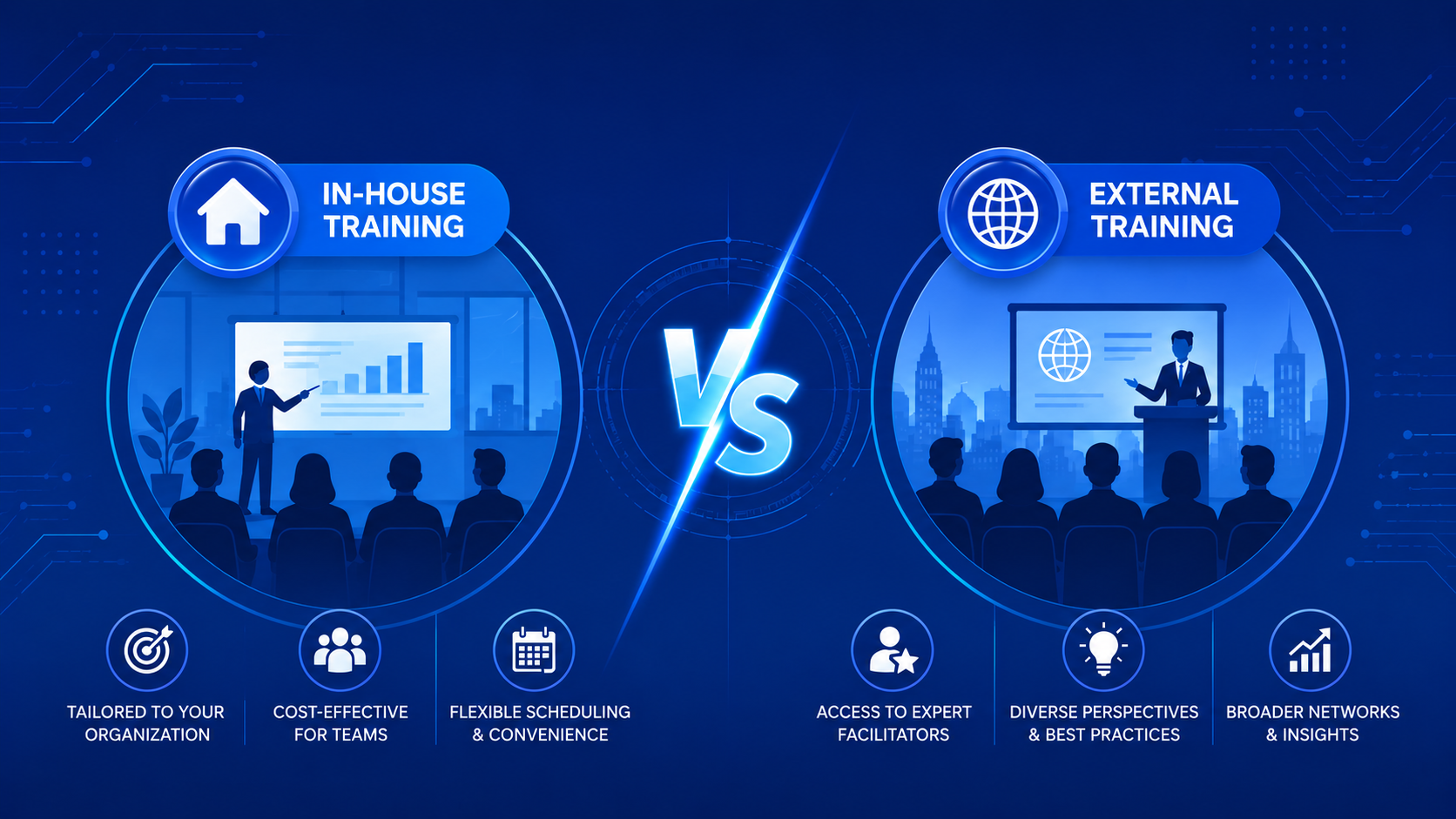
Leadership capability remains one of the most important drivers of organisational success. Companies invest significant resources in leadership development to strengthen decision making, improve team performance and prepare future managers. When designing leadership development initiatives, organisations often evaluate In house vs external leadership training providers to determine the most suitable learning model. Each option offers distinct advantages depending on organisational needs, training objectives and available resources.
Leadership training programmes aim to build essential competencies such as communication, strategic thinking and problem solving. However, organisations vary widely in structure, industry environment and leadership challenges. For this reason, selecting the right training delivery method becomes an important strategic decision. Understanding the differences between internal and external leadership training providers helps organisations design programmes which support long term leadership development.
This article explores the advantages, limitations and strategic considerations associated with both in house and external leadership training providers.
In house vs external leadership training
When organisations evaluate leadership development programmes, one of the first decisions involves selecting the training delivery model. The comparison of In house vs external leadership training focuses on whether leadership development should be conducted internally by organisational trainers or delivered by specialised external professionals. In house leadership training refers to programmes developed and delivered within the organisation itself. Internal training teams, human resource professionals or experienced leaders conduct these programmes using company resources and facilities.
External leadership training, on the other hand, involves engaging independent training providers or professional development organisations. These specialists deliver leadership programmes designed using industry expertise and structured learning frameworks. Both approaches contribute to leadership development. However, each option offers unique benefits depending on organisational priorities and leadership training goals.
Understanding in house leadership training
In house leadership training programmes are designed and delivered within the organisation by internal professionals. Human resource teams, learning departments or senior leaders often facilitate these training sessions. One key advantage of in house training involves familiarity with organisational culture and operational processes. Internal trainers possess direct experience of company policies, leadership expectations and workplace dynamics. This understanding allows training programmes to reflect real organisational scenarios. In house programmes also allow organisations to customise learning content according to internal needs. Training sessions may address leadership challenges specific to the organisation, including team coordination, project management or performance management issues.
Another benefit involves logistical convenience. Organisations can schedule internal training sessions according to operational requirements and employee availability. Internal facilities also reduce travel and venue expenses associated with external training programmes. However, in house training may have limitations. Internal trainers may lack specialised expertise in leadership development methodologies. Training programmes can also become repetitive if internal learning frameworks remain unchanged over time.
Understanding external leadership training providers
External leadership training providers offer professional development programmes designed by experienced trainers and industry specialists. These organisations focus specifically on leadership education and organisational learning. External trainers often bring diverse industry experience and advanced training techniques. Because they work with multiple organisations, they possess broader insight into leadership challenges across sectors. This experience allows them to introduce innovative leadership frameworks and management strategies.
External providers also offer structured programmes based on established leadership models and research. Participants benefit from learning methodologies developed through extensive training experience. Another advantage involves exposure to external perspectives. Employees attending external training programmes interact with professionals from other organisations, which encourages exchange of ideas and broader understanding of leadership practices. Many organisations engage external providers when designing training for leadership and management to ensure leadership development reflects recognised industry standards and modern learning approaches. Despite these advantages, external training programmes may not fully reflect internal organisational culture or operational processes. Organisations therefore need to ensure external training content aligns with company leadership objectives.
Benefits of in house leadership training
In house leadership training offers several practical advantages for organisations seeking targeted development initiatives. Internal programmes can address specific operational challenges faced by managers within the organisation. Because internal trainers understand company policies and procedures, training sessions often include practical examples drawn directly from organisational experience. Participants can therefore relate leadership concepts to their daily work responsibilities.
Cost efficiency also represents an advantage for organisations with established internal training teams. Once internal trainers and training materials are developed, programmes can be delivered repeatedly without significant external costs. In house training also supports continuity. Organisations can conduct leadership development programmes regularly as part of ongoing employee development initiatives. Furthermore, internal programmes allow organisations to maintain confidentiality when discussing strategic challenges or sensitive operational issues during training sessions.
Benefits of external leadership training providers
External leadership training providers offer expertise and resources often unavailable within internal training departments. Professional training organisations specialise in leadership education and frequently update their methodologies based on current management research. External trainers often employ interactive learning techniques such as leadership simulations, behavioural assessments and group workshops. These methods encourage participants to practise leadership skills in realistic scenarios.
External providers also bring impartial perspectives to leadership development. Because they operate outside the organisation, they can identify leadership challenges without internal bias. External programmes also encourage networking opportunities. Participants interact with professionals from other organisations and industries, which broadens their understanding of leadership practices. Many external leadership programmes also incorporate specialised learning modules such as corporate communication training to strengthen managerial communication capability and improve workplace collaboration.
Factors influencing the choice between internal and external training
Organisations evaluating In house vs external leadership training must consider several factors before selecting a training model. Leadership development objectives often represent the most important consideration. If an organisation requires highly customised training aligned with internal policies and operational practices, in house programmes may provide the most suitable solution. Internal trainers can tailor training content to address specific organisational challenges. However, organisations seeking exposure to advanced leadership frameworks or modern training techniques may benefit from external providers. Professional training organisations often possess specialised expertise and structured learning methodologies.
Budget considerations also influence training decisions. In house programmes may involve lower long term costs if the organisation maintains an established internal training team. External training providers may require higher initial investment but offer advanced learning resources and expertise. Organisational size also affects programme selection. Large organisations with extensive learning departments may successfully develop internal leadership programmes. Smaller organisations may prefer external training providers due to limited internal training capacity.
Combining internal and external leadership training approaches
Many organisations adopt a blended leadership development strategy which combines both internal and external training resources. This approach allows companies to benefit from the strengths of each training model. Internal programmes may focus on organisational culture, operational procedures and internal leadership expectations. External providers can supplement these programmes with specialised leadership frameworks and industry perspectives.
For example, organisations may conduct internal workshops focused on company policies and strategic priorities. External trainers may then deliver advanced leadership modules or specialised development programmes. This integrated approach ensures leadership training remains relevant to organisational needs while benefiting from professional training expertise. Blended leadership development strategies also allow organisations to adapt training programmes gradually as leadership capability evolves within the workforce.
Long term impact of effective leadership training
Leadership training programmes play an important role in shaping organisational performance. Strong leadership capability improves communication, decision making and team coordination across departments. Organisations which invest in structured leadership development programmes often experience improved employee engagement and stronger managerial accountability. Managers become better equipped to handle workplace challenges and guide teams effectively. Leadership training also supports organisational resilience during periods of change. Leaders who possess strong communication and problem solving skills can help employees navigate uncertainty with confidence. Whether delivered internally or through external providers, leadership training contributes to the development of capable leaders who support sustainable organisational growth.
Conclusion
Leadership development remains an essential investment for organisations seeking long term success and effective workforce management. When evaluating In house vs external leadership training, organisations must consider leadership development objectives, available resources and organisational structure. In house leadership training offers advantages such as organisational familiarity, flexibility and cost efficiency. External leadership training providers contribute specialised expertise, innovative learning methods and exposure to diverse industry perspectives. Many organisations benefit from combining both approaches to create comprehensive leadership development programmes. By selecting the appropriate training model, organisations can strengthen leadership capability and prepare managers to guide teams successfully within evolving business environments.