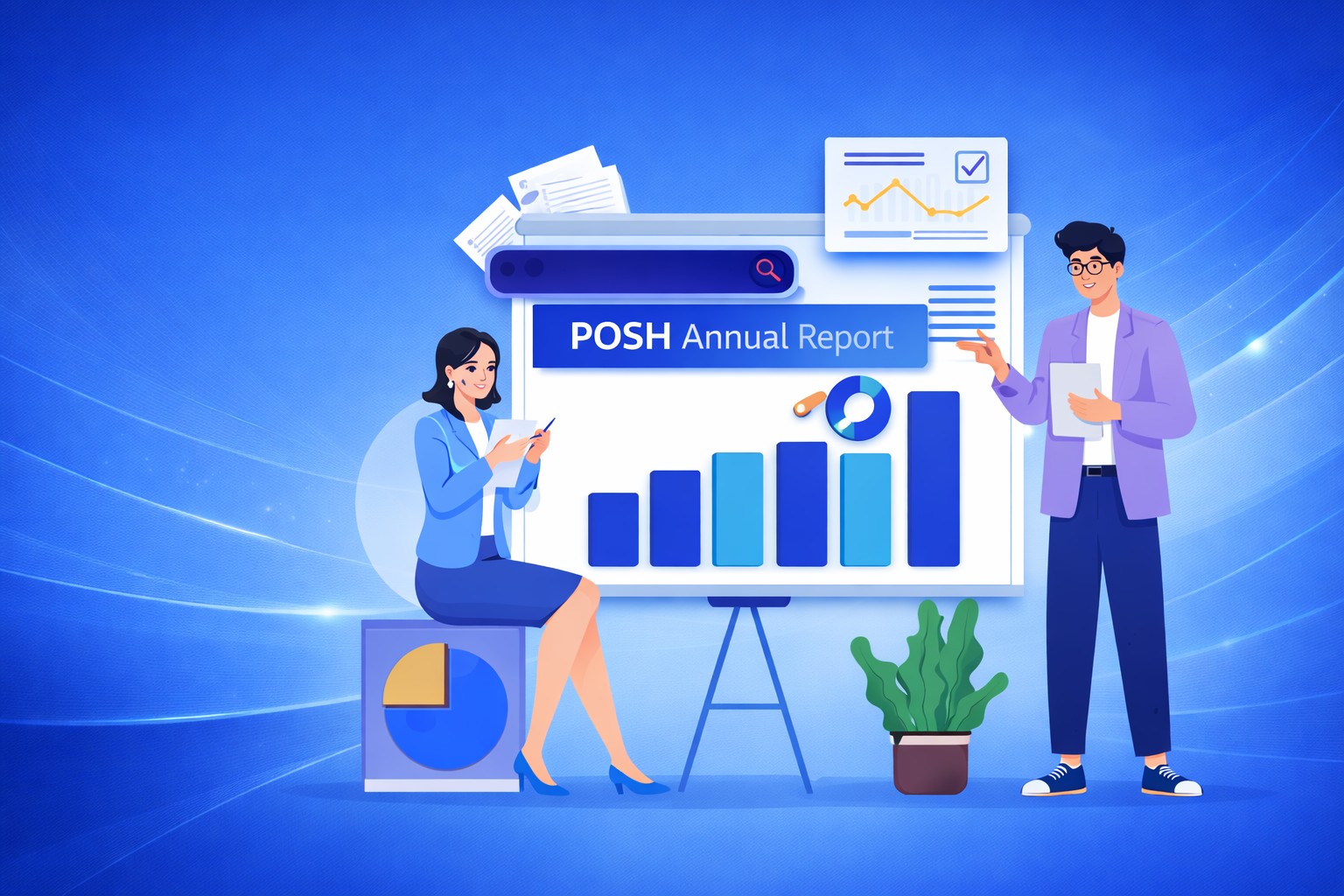
Compliance under the Sexual Harassment of Women at Workplace Act does not conclude with policy adoption or Internal Complaints Committee functioning. One of the most frequently misunderstood obligations is the requirement to file the POSH Annual Report. Many employers remain uncertain about who bears this responsibility and which authority must receive the report, leading to inadvertent non-compliance. Filing the POSH Annual Report is a statutory duty with regulatory consequences. Authorities rely on this report to assess whether employers have implemented the Act in practice. This article explains, with legal clarity, who must file the report, where it should be submitted, and how jurisdiction is determined.
Statutory Basis for POSH Annual Reporting
The obligation to file an annual report arises from the Sexual Harassment of Women at Workplace Act, 2013 and the rules framed under it. The law requires every Internal Complaints Committee to prepare a yearly report summarising complaints received and actions taken. Guidance issued by the Ministry of Women and Child Development clarifies that this report must be forwarded by the employer to the appropriate District Officer. Annual reporting is mandatory regardless of whether complaints were received during the year. A nil report must be filed even when no cases were reported.
Why Filing the POSH Annual Report Is a Critical Obligation?
Annual reporting is not a procedural formality. It is a compliance disclosure used by authorities to monitor workplace safety implementation. In recent years, District Officers and labour authorities have increased scrutiny of non-filing and delayed submissions. Failure to file may result in notices, inspections, and adverse compliance records. For employers, accurate reporting also serves as an internal governance tool, highlighting trends and systemic gaps.
Understanding Who Must File the POSH Annual Report
To File the POSH Annual Report, responsibility lies squarely with the employer. Although the Internal Complaints Committee prepares the report, the legal obligation to submit it rests with the organisation. Courts and authorities consistently hold employers accountable for non-submission or incorrect filing. Delegation to HR or the ICC does not transfer liability. This distinction is crucial for senior management and compliance officers.
Which Employers Are Required to File the Report?
All organisations covered under the POSH Act must file the annual report. This includes private companies, public sector undertakings, educational institutions, hospitals, non-profits, and startups once the statutory employee threshold is met. The obligation applies irrespective of sector, size beyond the threshold, or nature of employment contracts. Employers with multiple branches must ensure reporting covers all applicable workplaces. Exemptions are not available based on industry or business model.
Does the Requirement Apply When No Complaints Were Received
Yes. Even if no complaints were received during the reporting year, the employer must file a nil report. Authorities treat failure to file a nil report as non-compliance. The absence of complaints does not waive the reporting obligation. Nil reporting confirms the existence and functioning of the compliance framework.
Role of the Internal Complaints Committee
The Internal Complaints Committee plays a preparatory role. It compiles data related to complaints, inquiries, pendency, and actions taken. However, the ICC does not submit the report independently. The employer must ensure submission to the correct authority within the prescribed timeline. Clear internal coordination prevents confusion and delay.
Where Should the POSH Annual Report Be Submitted?
The annual report must be submitted to the District Officer appointed under the POSH Act. The District Officer is usually designated by the state government for each district. Jurisdiction depends on the location of the workplace. For organisations operating across multiple districts, reports may need to be submitted separately for each jurisdiction unless local guidance permits consolidated filing. Employers should confirm jurisdiction carefully to avoid misfiling.
Understanding District-Level Jurisdiction
District-level administration plays a central role in POSH enforcement. Some districts provide specific formats or online portals for submission. For example, administrative guidance issued by local authorities in NCR districts often outlines submission procedures and timelines. Employers should review district websites and notifications regularly. Incorrect submission location is a common compliance error.
Online Versus Physical Submission
Submission mode varies by district. Some District Officers accept online filing through government portals, while others require physical submission. Employers should not assume uniform digital availability. Confirmation from the local authority is essential. Acknowledgement receipts should always be retained as proof of compliance.
When Should the POSH Annual Report Be Filed
The report is typically due early in the calendar year following the reporting period. Exact deadlines may vary by district. Late filing is one of the most common compliance failures. Internal compliance calendars help ensure timely submission. Repeated delays may attract regulatory attention.
Common Misconceptions About Filing Responsibility
Many organisations believe the ICC or an external consultant is responsible for filing. This assumption is incorrect. The employer remains legally responsible even when third parties assist with preparation or review. Lack of clarity often leads to missed deadlines. Clear assignment of internal accountability is essential.
Link Between Filing and Broader Compliance
Annual reporting is closely linked to overall POSH compliance. Authorities often examine whether policies, training, and inquiries align with reported data. Many organisations integrate annual reporting within broader compliance workflows to ensure consistency. In practice, employers must File the Annual Report only once as an anchor reference, while continuing to address compliance holistically.
Consequences of Failure to File or Incorrect Filing
Failure to file may result in monetary penalties under the Act. Authorities may also initiate inspections or issue corrective directions. In legal proceedings, non-filing weakens the employer’s defence and may be viewed as negligence. Reputational impact is an additional risk, especially for regulated industries. Correct filing protects organisational credibility.
When External Guidance May Be Required
Complex organisational structures, multi-location operations, or first-time filers may require expert review. Engaging a Posh independent consultant can help employers interpret jurisdictional requirements and verify accuracy before submission.
Record Retention and Audit Preparedness
Employers must retain copies of submitted reports and acknowledgements. These records may be requested during inspections or court proceedings. Secure and systematic storage supports long-term compliance readiness. Consistency across years strengthens audit outcomes.
Conclusion
Understanding who must File the annual Report and where it should be submitted is essential for lawful compliance. The obligation rests with the employer and applies regardless of complaint volume. Correct jurisdiction, timely submission, and accurate disclosure protect organisations from regulatory risk and strengthen workplace governance. When approached with clarity and discipline, annual reporting becomes a reliable compliance safeguard rather than a regulatory burden.