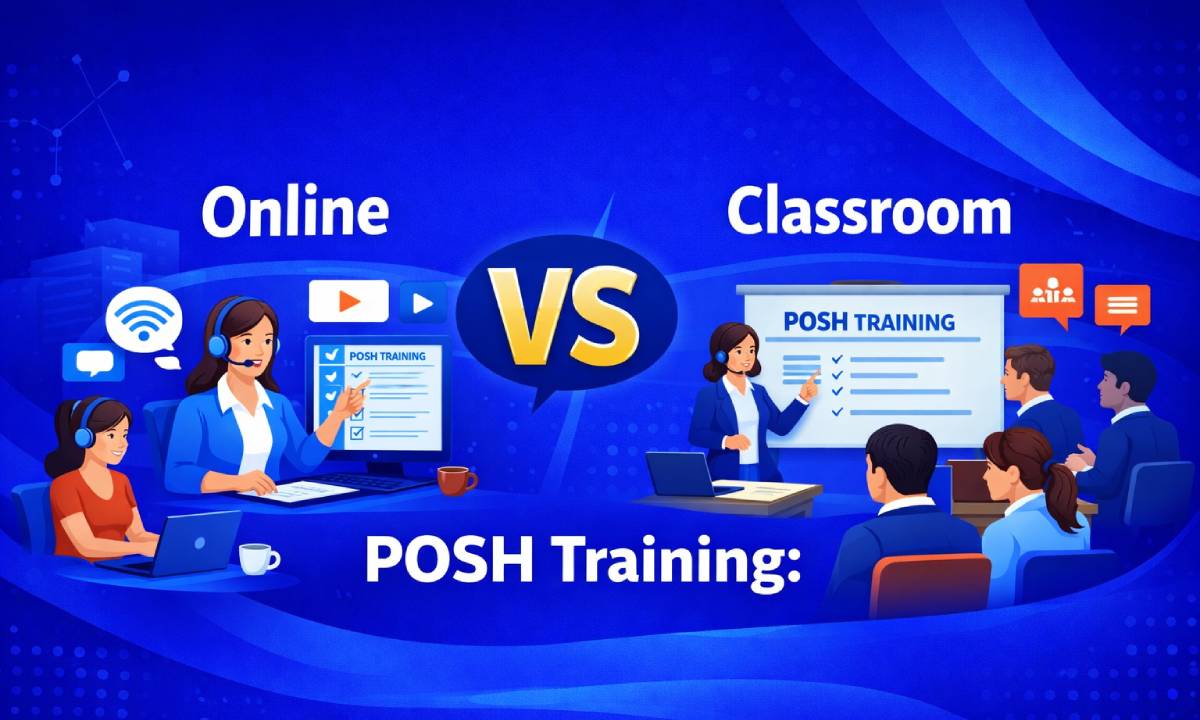
The debate around Online vs Classroom POSH Training has intensified as Indian workplaces adapt to hybrid models and digital learning platforms. Employers are no longer asking whether POSH training is required. That obligation is clear under the Prevention of Sexual Harassment of Women at Workplace Act, 2013. The real question today concerns effectiveness. Should organisations choose online POSH training for flexibility and scale, or classroom sessions for engagement and interaction?
Understanding the strengths and limitations of both formats is essential for employers aiming to meet statutory obligations while building a respectful workplace culture. The choice should align with legal expectations, workforce structure, and behavioural outcomes rather than convenience alone.
Online vs Classroom POSH Training: Understanding the Core Differences
When examining Online vs Classroom POSH Training, the first distinction lies in delivery method. Online training typically involves virtual live sessions or recorded modules accessed through learning platforms. Classroom training involves in person sessions facilitated by trainers in a physical setting.
Both formats can satisfy statutory requirements if delivered effectively. The Ministry of Women and Child Development, through official guidance published on its website, emphasises employer responsibility to organise regular awareness programmes. The law does not mandate a specific format. It mandates effectiveness. Therefore, the focus must shift from mode of delivery to quality of engagement and learning outcomes.
Accessibility and Reach
Online POSH training offers undeniable advantages in accessibility. Organisations with distributed teams, remote employees, or multiple branches benefit from the scalability of virtual sessions. Employees can attend from different cities without travel or logistical constraints.
In regions such as Delhi NCR, where workforce mobility is high, online delivery helps maintain consistency across locations. Virtual platforms also allow easy recording and documentation, which supports compliance evidence.
However, accessibility alone does not guarantee understanding. Passive recorded modules often result in low engagement. Live online sessions improve interaction but require skilled facilitation.
Engagement and Interaction
Classroom POSH training typically offers stronger face to face interaction. Participants can ask questions freely, discuss real scenarios, and observe non-verbal cues. Sensitive topics often require safe spaces for dialogue.
In classroom settings, trainers can gauge reactions and adjust discussions accordingly. This dynamic interaction enhances clarity and behavioural understanding.
Online sessions can replicate interaction when designed well. Breakout discussions, polls, and live case analysis improve engagement. Yet technological barriers and screen fatigue sometimes limit participation. Effectiveness depends on format design rather than format label.
Behavioural Learning Outcomes
The objective of POSH training extends beyond legal awareness. It aims to shape workplace behaviour and prevent misconduct. Classroom sessions often excel in behavioural training. Participants engage in scenario discussions and reflect collectively. This shared learning builds empathy and awareness. Online training can achieve similar results when interactive and case based. However purely recorded modules focusing on definitions rarely change behaviour. Organisations investing in a structured POSH awareness training program often combine interactive elements regardless of format to ensure behavioural impact.
Comfort and Psychological Safety
Discussing harassment requires sensitivity. Some employees feel more comfortable participating anonymously in online sessions. Virtual chat features allow questions without fear of judgement. Conversely others prefer in person dialogue where trust builds through direct interaction. Employers must assess workforce culture. Psychological safety matters more than physical setting. Trainers skilled in facilitation create safe environments in both formats.
Cost and Logistical Considerations
Online training reduces travel and venue costs. It allows larger audiences to attend without logistical complexity. This makes it attractive for organisations with limited budgets or widespread teams.
Classroom training involves venue arrangements, scheduling coordination, and sometimes travel. However, the depth of engagement often justifies investment. Employers should evaluate cost against risk exposure. Poorly delivered low-cost training may create compliance vulnerability.
Documentation and Compliance Evidence
From a compliance perspective, both formats require proper documentation. Attendance records, training content, and facilitator credentials must be maintained. Online platforms automatically record participation, which simplifies documentation. Classroom sessions require manual attendance records and signed registers. Authorities and courts examine training quality rather than delivery format alone. Documentation supports employer due diligence.
Suitability For Internal Committee Training
When comparing Online vs Classroom POSH Training for Internal Committee members, classroom formats often provide greater depth. ICC training requires discussion of inquiry procedure, documentation standards, and principles of natural justice. Mock inquiries and drafting exercises work effectively in person. However virtual workshops with breakout rooms can replicate this experience when facilitated well. Employers should ensure advanced ICC training includes interactive components regardless of delivery mode.
Regional Considerations in Delhi NCR
Workplaces in Delhi NCR often operate in hybrid models. Technology firms and corporate offices frequently adopt online sessions. Manufacturing units and field-based teams may prefer classroom training. Many organisations offering POSH training in Noida combine formats based on workforce structure. Hybrid strategies allow flexibility while maintaining engagement. Local context influences what works best.
Hybrid Training as A Balanced Approach
Increasingly organisations adopt blended models. Online modules provide baseline legal awareness. Classroom workshops focus on scenario discussion and behavioural clarity. This layered approach maximises reach and engagement. Employees receive consistent legal knowledge online and deeper understanding in person. Hybrid models also support refresher training without excessive disruption.
Trainer Expertise Determines Effectiveness
The effectiveness of Online vs Classroom POSH Training ultimately depends on trainer expertise. Skilled facilitators adapt content to format. They encourage participation and manage sensitive discussions with care. Unskilled delivery fails regardless of format. Even the most interactive classroom session loses impact without thoughtful facilitation. Employers should prioritise trainer credibility and experience over delivery mode alone.
Legal Compliance and Format Neutrality
The POSH Act does not prescribe format. Section 19 requires employers to organise workshops and awareness programmes. Courts assess whether employees received meaningful training. Therefore, compliance depends on substance rather than structure. Employers must ensure training content covers legal definitions, reporting mechanisms, confidentiality obligations, and behavioural expectations. Choosing format based solely on convenience risks undermining effectiveness.
Addressing Remote and Hybrid Work Realities
Modern workplaces operate across digital platforms. Online harassment through messaging apps and virtual meetings presents new challenges. Online training naturally addresses these realities. Virtual examples resonate with remote employees. Classroom sessions must incorporate digital scenarios explicitly to remain relevant. Both formats can adapt to hybrid work if content reflects current realities.
Measuring Effectiveness
Employers should measure training effectiveness through feedback, participation quality, and reduction in complaints. Surveys and follow up discussions provide insight. Completion rates alone do not indicate understanding. Engagement metrics matter more. Regular review helps refine format and delivery approach.
What Works Best for Employees?
There is no universal answer in the Online vs Classroom POSH Training debate. Effectiveness depends on organisational size, workforce distribution, culture, and trainer capability. Small cohesive teams may benefit more from classroom dialogue. Large distributed organisations may rely on online platforms supplemented with interactive sessions. Employers should assess risk profile and employee preferences before deciding.
Conclusion
The discussion around Online vs Classroom POSH Training should focus on effectiveness rather than convenience. Both formats can meet legal obligations when designed thoughtfully and delivered by experienced professionals. Employers must prioritise behavioural impact, engagement, and documentation. The goal remains prevention of harassment and promotion of respectful workplaces. Selecting the right format requires understanding organisational context, workforce needs, and compliance expectations. When chosen carefully, either mode can support a safer and more accountable workplace culture.