Understanding the difference between Leadership Training vs Management Training is essential for organisations aiming to develop effective, future-ready teams. While both forms of training aim to enhance performance and decision-making, they focus on different skills, responsibilities, and outcomes. Leadership Training vs Management Training helps companies identify the right development initiatives for employees at various levels, ensuring strategic alignment and long-term business success.
In today’s dynamic corporate environment, businesses need managers who can execute processes efficiently and leaders who can inspire innovation and guide teams through change. Organisations that fail to distinguish between leadership and management training often invest in programmes that deliver limited impact. This article explores the nuances between these two forms of training, their objectives, benefits, and how organisations can choose the right approach for their workforce.
Leadership Training vs Management Training: Key Differences
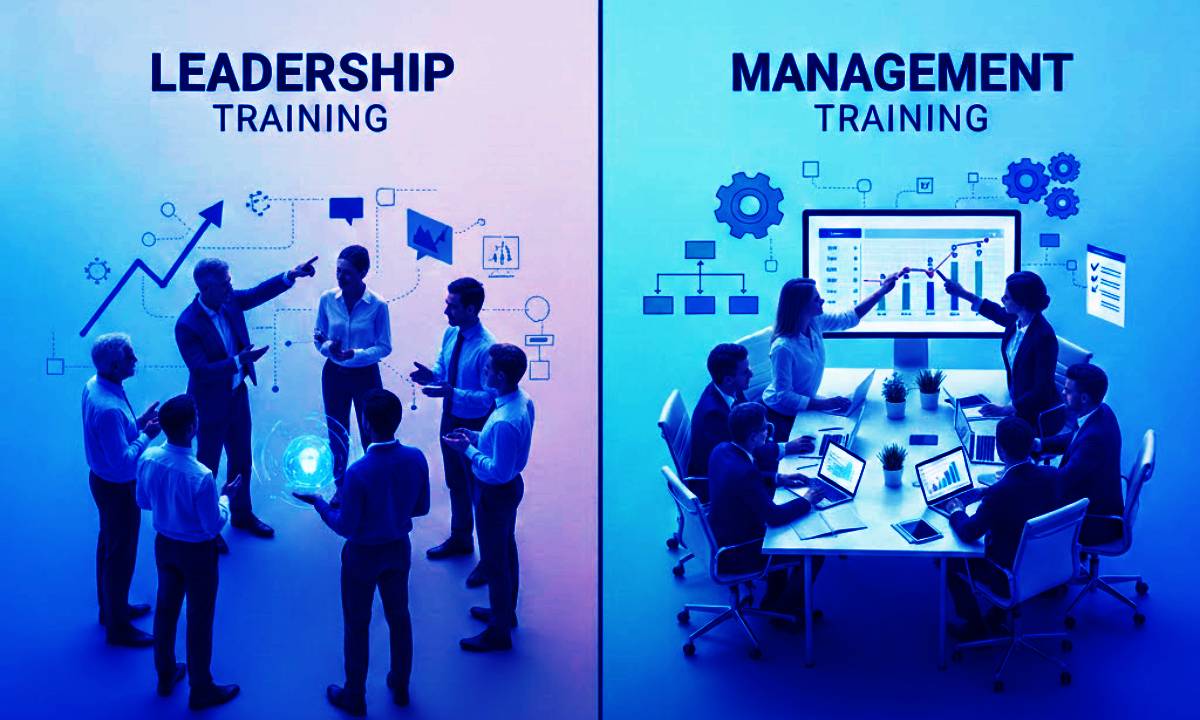
Leadership Training and Management Training are often used interchangeably, but their focus and outcomes differ significantly. Leadership Training equips individuals with skills to inspire, influence, and guide teams toward achieving organisational vision. It emphasises soft skills, strategic thinking, and the ability to drive change.
Management Training, on the other hand, focuses on operational excellence, task allocation, process optimisation, and team supervision. Managers learn to plan, organise, and monitor resources efficiently to achieve organisational objectives. While leadership fosters motivation and long-term growth, management ensures day-to-day operations are executed effectively.
a) Core Focus Areas
Leadership training develops competencies such as emotional intelligence, communication, conflict resolution, and vision setting. Managers learn to influence, motivate, and guide employees toward achieving goals. In contrast, management training prioritises project planning, workflow management, performance evaluation, and resource optimisation. Both are critical, but their application differs based on role and organisational requirements.
b) Impact on Organisational Culture
Leadership development influences organisational culture profoundly. Leaders set behavioural standards, drive innovation, and shape team dynamics. Leadership Training for managers enhances their ability to mentor employees, encourage collaboration, and build trust. Management training improves operational discipline, ensuring teams follow processes and meet performance standards. Organisations benefit most when both programmes are integrated into a cohesive talent development strategy.
Why Leadership Training is Essential
Leadership Training prepares individuals to take strategic decisions, handle uncertainty, and drive organisational change. Leaders trained in vision setting and ethical decision-making create environments where employees feel motivated and engaged. Emotional intelligence, resilience, and communication skills are central to leadership development.
Investing in leadership training for managers helps organisations retain high-potential talent, build succession pipelines, and strengthen governance. Employees led by competent leaders demonstrate higher engagement, collaboration, and innovation. In the Indian corporate context, leadership development programmes also support navigating complex regulatory frameworks and diverse workforce dynamics.
Why Management Training Matters
Management Training ensures that operational processes are executed efficiently and resources are utilised optimally. Managers trained in task allocation, workflow management, and performance evaluation can maintain productivity, meet deadlines, and reduce organisational risk.
Operational challenges require practical problem-solving skills. Management training equips employees to monitor KPIs, address bottlenecks, and implement standard operating procedures effectively. Organisations that prioritise management training can achieve consistent results, maintain compliance, and optimise resource utilisation.
Integrating Leadership and Management Training
While distinct, leadership and management training complement each other. Organisational effectiveness depends on both visionary leaders and competent managers. An integrated training strategy ensures employees develop the skills necessary to lead teams strategically while managing operational responsibilities efficiently.
Companies often implement blended programmes combining leadership and management modules. For instance, leadership sessions may focus on decision-making, communication, and vision setting, while management workshops cover project planning, performance monitoring, and resource management. Organisations may also engage corporate training services to design tailored programmes aligned with internal goals.
Choosing the Right Approach
Selecting between Leadership Training vs Management Training requires understanding the target audience, organisational objectives, and competency gaps. Emerging leaders may benefit from leadership-focused programmes, while newly promoted managers require management training to handle operational responsibilities effectively.
Assessment tools such as performance reviews, 360-degree feedback, and skill gap analysis help determine the most suitable programme. The delivery format classroom, online, or blended should also align with workforce needs and logistical considerations.
In India, customised leadership training for managers and operational training programmes help organisations balance strategic growth with process efficiency. Partnering with experienced corporate training providers ensures structured content, expert facilitation, and measurable outcomes.
Benefits of Combining Leadership and Management Development
Integrating leadership and management development offers several advantages:
- Enhanced Decision Making: Employees develop strategic thinking and operational competence, improving overall decision-making.
- Stronger Succession Planning: High-potential employees are prepared for future leadership roles while mastering managerial responsibilities.
- Improved Employee Engagement: Leaders inspire and managers ensure structured work environments, boosting team motivation.
- Operational Efficiency: Management training enhances process adherence and performance monitoring.
- Resilient Organisational Culture: Leadership fosters innovation, while management ensures consistent execution.
An effective talent development strategy balances visionary leadership with efficient management, creating a workforce capable of navigating challenges and seizing opportunities.
Conclusion
Understanding Leadership Training vs Management Training is critical for organisations seeking sustainable growth, operational excellence, and employee engagement. Leadership development prepares employees to guide teams, foster innovation, and set strategic direction, while management training ensures operational efficiency, resource optimisation, and process discipline.
Combining both approaches within a structured development framework produces well-rounded leaders capable of driving organisational success. Partnering with professional corporate training services ensures customised programmes, expert facilitation, and measurable impact. Organisations that integrate leadership and management training create a resilient, high-performing workforce ready to face future challenges.