
Workplace compliance under the Sexual Harassment of Women at Workplace Act depends on how effectively employers establish and operate their grievance redressal mechanism. The Internal Complaints Committee (ICC) setup is the foundation of this framework. Without a properly constituted ICC and a qualified external member, employers’ risk invalid inquiries, regulatory penalties, and reputational damage. Indian courts and authorities closely examine ICC constitution while assessing POSH compliance. This guide explains how employers should set up the ICC and appoint an external member correctly, with practical clarity on legal requirements, roles, and best practices.
Legal Background of ICC Constitution Under POSH Act
The Sexual Harassment of Women at Workplace Act 2013 mandates every organisation with ten or more employees to constitute an Internal Complaints Committee. The ICC acts as a quasi-judicial body empowered to receive complaints, conduct inquiries, and recommend action. Guidance issued by the Ministry of Women and Child Development confirms that ICC constitution is not optional. It is a statutory duty of every employer, irrespective of sector or industry. Failure to constitute the ICC in the prescribed manner may invalidate the inquiry process and expose the employer to penalties.
Understanding Internal Complaints Committee (ICC) Setup
The Internal Complaints Committee setup involves more than appointing names on paper. It requires careful selection of members, proper documentation, and functional independence. The law prescribes both the composition and authority of the ICC. Employers must ensure that the committee operates impartially and follows principles of natural justice. The inclusion of an external member is central to maintaining neutrality. An improperly set up ICC undermines the entire POSH framework.
Mandatory Composition of the ICC
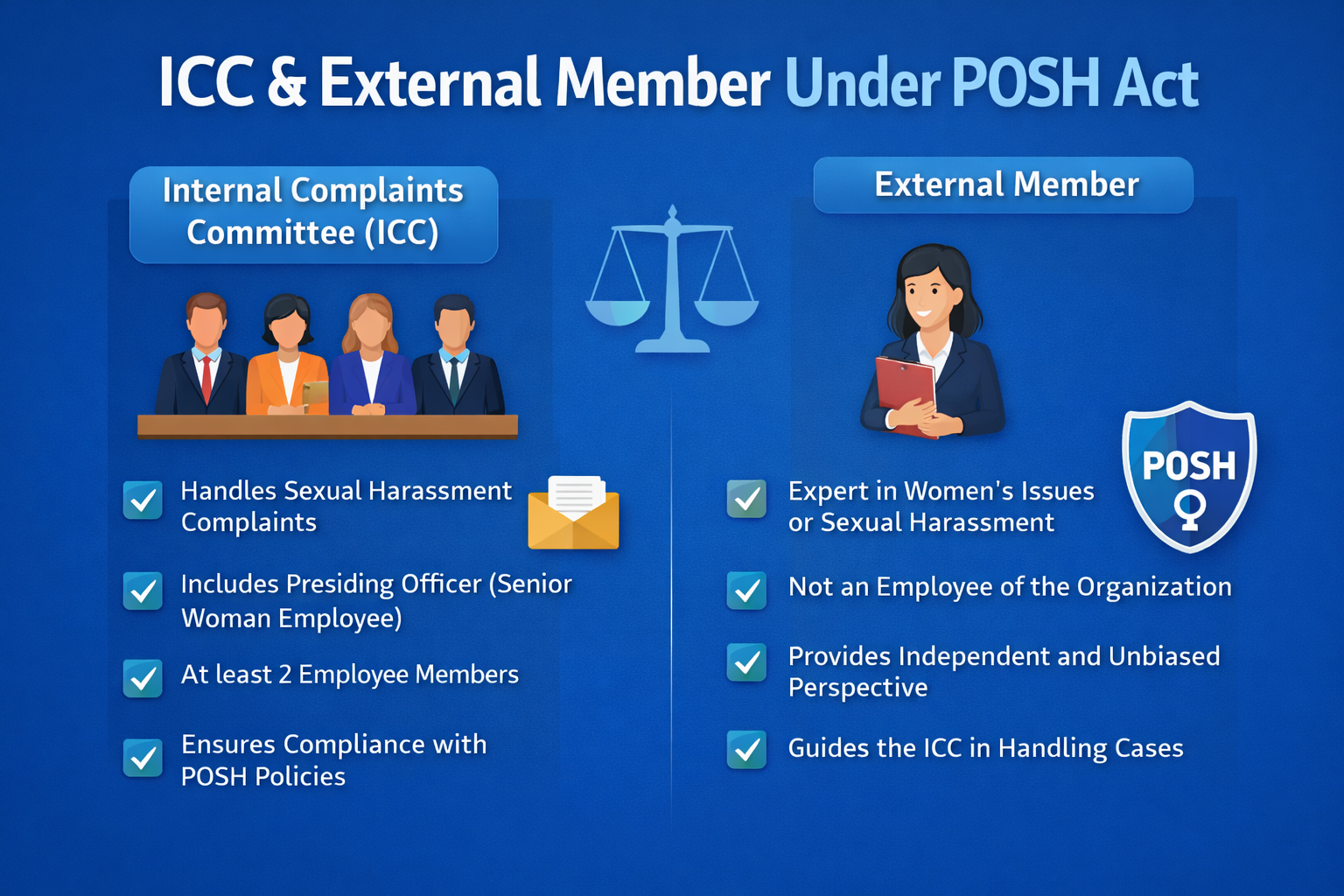
The Act specifies who must form part of the ICC. The committee must be headed by a Presiding Officer who is a senior woman employee. In addition, it must include at least two internal members committed to women’s causes or familiar with labour or service law. One external member must also be appointed. This member must be associated with a non-governmental organisation or have experience in matters relating to sexual harassment. Employers must ensure diversity of perspective while maintaining compliance with statutory requirements.
Role and Importance of the External Member
The external member is a critical safeguard against internal bias. Employees may hesitate to raise complaints if they perceive inquiries as management controlled. The external member assures independence and fairness. This member participates actively in all stages of inquiry. Their presence strengthens credibility and protects findings from legal challenge. Courts have consistently held that absence or token involvement of the external member renders ICC proceedings vulnerable.
Eligibility Criteria for External Member Appointment
The law requires the external member to possess relevant experience in social work, women’s rights, labour law, or workplace harassment issues. Designation alone is insufficient. Employers should verify credentials and document experience at the time of appointment. The external member must not have any conflict of interest with the organisation. Appointment letters should clearly define responsibilities, tenure, confidentiality obligations, and remuneration.
Step-by-Step Process for ICC Setup
The first step in ICC setup is identifying eligible internal members. The Presiding Officer should hold a senior position and command organisational respect. Internal members should demonstrate sensitivity and impartiality. The next step involves selecting and appointing a qualified external member. Once members are finalised, the employer must issue a formal constitution order specifying roles and tenure. This order should be circulated internally and displayed prominently to ensure employee awareness.
Documentation Required for ICC Constitution
Documentation plays a vital role in compliance. Employers must maintain records of appointment letters, consent of members, and the constitution order. Authorities often request these documents during inspections or litigation. Proper documentation demonstrates due diligence and strengthens the employer’s compliance position. Records should be reviewed periodically to ensure continued validity.
Training Requirements for ICC Members
An ICC cannot function effectively without training. Members must understand inquiry procedures, evidence assessment, confidentiality, and statutory timelines. Untrained committees often commit procedural errors, which courts treat seriously. Orientation ensures consistency and legal compliance. Many employers integrate structured training during ICC & External Member Set Up to ensure readiness from the outset.
Jurisdiction and Coverage of the ICC
The ICC’s jurisdiction extends beyond physical office premises. It covers remote work, work related travel, training sessions, and virtual interactions. Employers must ensure the ICC’s authority is clearly stated in internal policies. Ambiguity about jurisdiction may discourage reporting and weaken enforcement. Clear communication supports employee confidence in the redressal mechanism.
Common Errors in ICC Constitution
One common error is appointing junior employees as Presiding Officers. Another is appointing external members without relevant experience. Employers also sometimes fail to renew ICC tenure after expiry. Such oversights invalidate proceedings conducted by an improperly constituted committee. Periodic compliance reviews help avoid these risks.
Independence and Confidentiality Obligations
ICC members must operate independently and maintain strict confidentiality. Information disclosed during proceedings must not be shared outside the committee. Confidentiality breaches damage trust and expose employers to legal consequences. Clear internal protocols support ethical functioning. Employers should reinforce these obligations during training and orientation.
Role of ICC in Ongoing POSH Compliance
Beyond handling complaints, the ICC contributes to broader compliance. It supports awareness initiatives, advises on preventive measures, and assists with statutory reporting. Annual disclosures rely on accurate inquiry records maintained by the ICC. Effective functioning strengthens the organisation’s compliance narrative.
When to Seek External Expertise
Complex organisational structures or multi location operations may require expert guidance. External review ensures statutory alignment and procedural accuracy. Employers often consult expert POSH consultants in Delhi, India for guidance on ICC setup, training, and compliance audits.
Best Practices for Employers
Employers should treat ICC setup as a governance responsibility rather than a formality. Selection of competent members, regular training, and clear documentation are essential. Senior management involvement signals commitment and reinforces accountability. Periodic review ensures continued compliance. A well-functioning ICC protects employees and the organisation alike.
Conclusion
The Internal Complaints Committee (ICC) setup is a legal and ethical obligation for employers under the POSH Act. Proper constitution, qualified external member participation, and ongoing training ensure fairness and credibility. Employers who invest time and care in setting up the ICC build safer workplaces and reduce compliance risk. An effective ICC reflects organisational commitment to dignity, transparency, and lawful governance.