Anti Bribery & Corruption Training for Employees

Comprehensive Anti-Bribery Training for Ethical Workplace Culture

Our Anti Bribery training is designed to help employees recognize, prevent, and report unethical practices before they become risks to your organization. Through real-life scenarios, case studies, and interactive sessions, participants gain a clear understanding of how bribery occurs and how to respond responsibly.
This program strengthens ethical decision-making and fosters a transparent culture across all departments.

Anti-Corruption Training & Compliance Program for Employees

Our Anti corruption training and specially designed Anti Bribery & Corruption program equip your workforce with the knowledge needed to identify red flags, avoid conflicts of interest, and comply with global legal standards. We offer practical, easy-to-understand anti corruption training for employees that empowers them to act with integrity, follow internal policies, and maintain complete compliance in everyday operations.

Make Decision that Make a Difference for You and the Parties Involved.

What is Anti Bribery and Anti Corruption training?

Anti Bribery and Anti Corruption training is a compliance programme that educates employees about recognising, preventing, and responding to bribery, corruption, facilitation payments, conflicts of interest, and unethical business practices. It helps organisations promote ethical conduct and comply with applicable legal and regulatory requirements.

Anti Bribery and Anti Corruption training is relevant for organisations of all sizes, particularly those operating in regulated industries, working with government authorities, or engaging with international clients and suppliers. Each organisation should assess its compliance obligations based on its business activities and applicable laws.

Anti Bribery and Anti Corruption training should be provided to employees, senior management, directors, procurement teams, finance professionals, sales personnel, compliance officers, and any individuals whose roles involve business decisions or interactions with third parties that may present corruption risks.

The training generally covers bribery and corruption risks, conflicts of interest, gifts and hospitality, third party due diligence, whistleblowing mechanisms, ethical decision making, reporting procedures, internal controls, and the responsibilities of employees and management in maintaining organisational compliance.

Anti Bribery and Anti Corruption training should be conducted regularly to reinforce ethical standards and compliance awareness. Many organisations provide training during employee induction and organise periodic refresher programmes. The appropriate frequency depends on business operations, regulatory developments, and organisational risk assessments.

Yes. Anti Bribery and Anti Corruption training can be delivered through online, classroom, or hybrid learning formats. Interactive virtual sessions enable organisations to train employees across multiple locations while maintaining consistent learning outcomes and supporting appropriate training documentation.

A written policy establishes clear expectations regarding ethical conduct, prohibited activities, reporting procedures, and employee responsibilities. It provides guidance for consistent decision making and helps organisations communicate their commitment to preventing bribery and corruption throughout the workplace and business relationships.

Organisations should maintain records such as attendance registers, training materials, participant acknowledgements, assessment results, and completion certificates where applicable. Maintaining accurate documentation supports internal compliance management and demonstrates that employee awareness initiatives have been conducted.

Organisations can identify risks by assessing business operations, third party relationships, procurement activities, financial transactions, and areas involving government interactions. Regular risk assessments and internal reviews help businesses recognise potential vulnerabilities and implement appropriate compliance measures.

Common warning signs may include unusual payment requests, excessive commissions, unexplained cash transactions, conflicts of interest, inaccurate financial records, undisclosed relationships with vendors, or requests to bypass established approval procedures. Such indicators should be reviewed in accordance with the organisation’s internal compliance processes.

Businesses should evaluate the provider’s legal knowledge, compliance expertise, industry experience, training methodology, and ability to customise programmes. Practical case studies, interactive learning, and content aligned with applicable regulations contribute to more effective employee awareness and compliance outcomes.

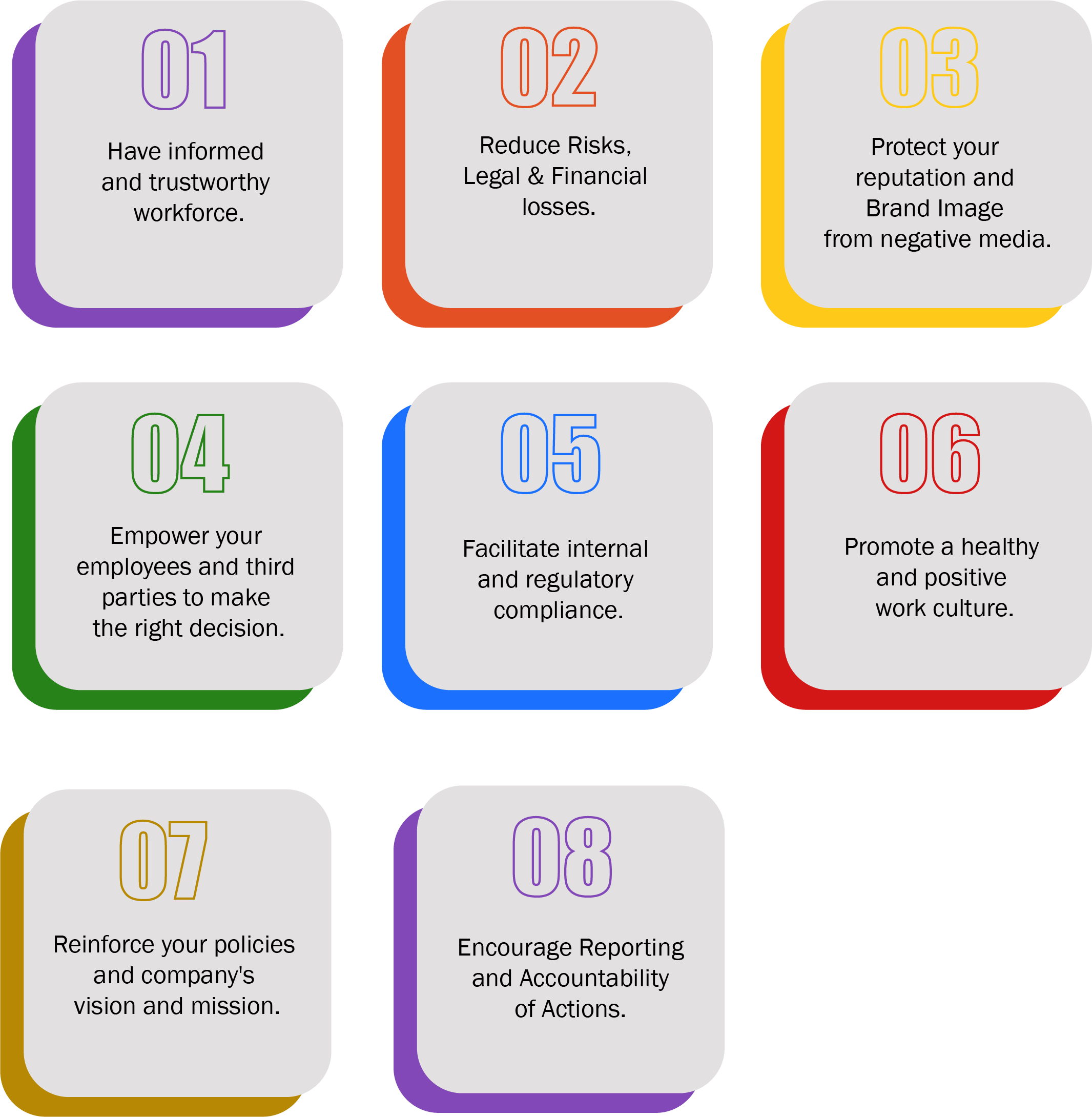
Anti Bribery and Anti Corruption training helps organisations strengthen ethical business practices, improve employee awareness, support regulatory compliance, reduce organisational risks, and promote transparent decision making. It also reinforces a culture of integrity that supports long term business sustainability and stakeholder confidence.