
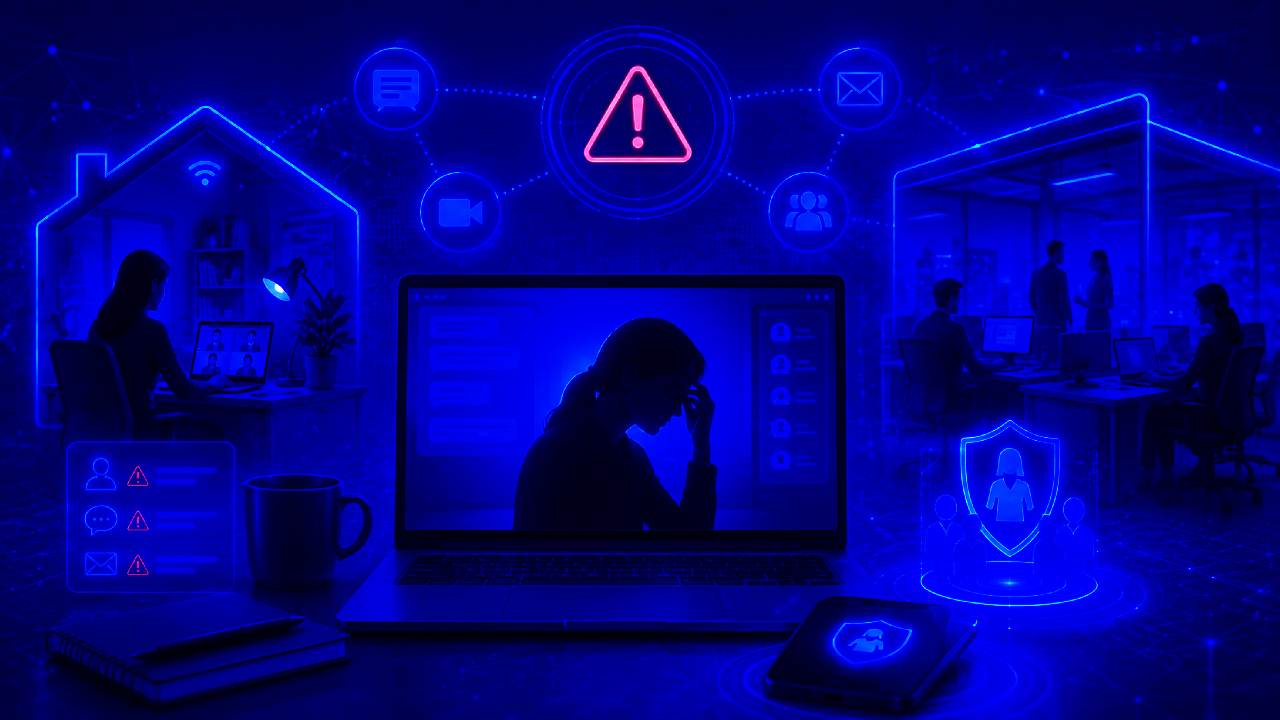
The rise of flexible work models has transformed modern employment practices across India. Companies now rely heavily on remote collaboration, virtual meetings, and distributed teams to maintain business continuity. While hybrid work offers flexibility and operational efficiency, it has also introduced complex workplace safety concerns. Hybrid Workplace POSH compliance has therefore become a growing priority for employers attempting to balance legal responsibilities with evolving work environments.
Traditional workplace policies were designed for physical office spaces. Today, employee interactions happen through video calls, messaging platforms, collaboration tools, and personal devices. This shift has expanded the scope of workplace conduct under the Prevention of Sexual Harassment Act, 2013. Employers must now address digital behaviour, virtual communication boundaries, and remote workplace accountability more carefully than ever before.
This article explores how hybrid workplaces are creating new POSH challenges, the legal implications for employers, common compliance gaps, and strategies organisations can adopt to build safer hybrid work cultures.
Understanding Hybrid Workplace POSH Compliance
The POSH Act defines workplace broadly. It includes not only physical office locations but also any place visited during employment activities. Courts and legal experts increasingly interpret virtual working environments as extensions of the workplace. This means inappropriate conduct during online meetings, work chats, virtual events, business travel, or remote communication may fall within the scope of workplace harassment. Employers can no longer rely solely on office based monitoring systems to manage employee behaviour. Hybrid work has blurred professional boundaries. Employees now interact through informal digital channels where communication often becomes casual and unregulated. Without clear behavioural standards, organisations face greater compliance risks. The challenge for employers lies in adapting workplace safety policies to digital and flexible work structures without compromising employee trust or operational efficiency.
Why Hybrid Work Has Increased POSH Risks
Hybrid work changes how employees communicate, collaborate, and socialise. These changes create several new risk areas which organisations must address proactively.
1. Reduced Physical Oversight
Managers and HR teams cannot observe employee interactions directly in remote settings. In traditional offices, inappropriate conduct may be noticed more quickly through physical supervision. In hybrid environments, problematic behaviour often remains hidden until complaints emerge.
2. Informal Digital Communication
Messaging applications encourage fast and casual conversations. Employees may send jokes, comments, emojis, or late night messages without understanding professional boundaries. Digital informality often increases the possibility of inappropriate communication.
3. Virtual Meeting Misconduct
Video conferences have introduced new workplace conduct concerns. Inappropriate comments, intrusive questions, offensive backgrounds, or repeated targeting during meetings can create uncomfortable environments for employees.
4. Blurred Personal and Professional Boundaries
Remote work frequently merges personal spaces with professional interactions. Employees may feel pressured to remain constantly available, respond after work hours, or participate in informal online conversations.
5. Increased Isolation for Employees
Employees working remotely may hesitate to report misconduct due to fear of exclusion, lack of support, or uncertainty regarding complaint procedures. Isolation can reduce reporting confidence significantly.
How the POSH Act Applies to Hybrid Workplaces
Although the POSH Act was introduced before large scale hybrid work models became common, its principles remain applicable to virtual environments. The law requires employers to create safe workplaces and prevent sexual harassment during employment related interactions. Courts increasingly recognise virtual communication as part of workplace activity when interactions occur during professional engagements. Harassment through emails, messaging applications, online meetings, collaboration platforms, or work related social media communication may fall within POSH jurisdiction. Employers therefore remain responsible for addressing complaints arising from digital conduct involving employees, vendors, consultants, interns, or clients. Organisations must ensure workplace policies explicitly cover remote communication channels and virtual behaviour standards.
Common POSH Challenges in Hybrid Workplaces
Hybrid workplaces create several compliance challenges which traditional policies often fail to address adequately.
1. Difficulty in Defining Workplace Boundaries
When employees work from home, cafes, co working spaces, or during travel, defining the workplace becomes complicated. Employers must clarify which interactions fall under workplace conduct rules.
2. Evidence Collection Challenges
Digital harassment cases often involve screenshots, deleted messages, private chats, or video interactions. Internal Committees may struggle with evidence verification and confidentiality management.
3. Inconsistent Policy Awareness
Remote employees may miss awareness sessions or policy updates. Without regular engagement, employees may remain unclear about reporting procedures and behavioural expectations.
4. Cultural Misinterpretation in Digital Communication
Text based communication lacks tone and context. Messages intended casually may be perceived differently by recipients, increasing misunderstanding risks.
5. Confidentiality Concerns
Remote complaint handling introduces privacy challenges. Employees may participate in investigations from shared living spaces where confidentiality becomes difficult to maintain.
Why Organisations Must Update POSH Policies for Hybrid Work
Many organisations still rely on workplace policies drafted for traditional office environments. Hybrid work requires updated definitions, procedures, and communication standards. Policies should clearly explain acceptable online conduct, communication etiquette, reporting channels, and investigation procedures for digital complaints. Employers should also define inappropriate virtual behaviours explicitly. Examples may include offensive messages, repeated personal communication, inappropriate video conduct, intrusive comments, or unauthorised sharing of images. Training materials should include hybrid workplace scenarios rather than focusing only on physical office situations. Modern organisations increasingly invest in digital workplace POSH training programmes to educate employees on virtual conduct expectations, remote collaboration etiquette, and online behavioural accountability.
The Role of Leadership in Hybrid POSH Compliance
Leadership behaviour significantly influences workplace culture in hybrid settings. Employees observe how managers communicate during virtual interactions and often replicate those behaviours. Leaders should model professional communication, respect digital boundaries, and encourage inclusive participation during meetings. Transparent communication around workplace safety also strengthens employee trust.
Managers must receive specialised guidance on identifying inappropriate digital behaviour and handling complaints sensitively. Delayed or informal responses can increase legal and reputational risks for organisations. Leadership teams should also ensure remote employees remain connected to workplace culture and awareness initiatives rather than becoming isolated from organisational systems.
Importance of Regular POSH Training in Hybrid Work Models
Frequent awareness training is essential in hybrid environments because workplace interactions now occur across multiple digital channels. Employees should understand behavioural expectations during virtual meetings, internal chats, emails, collaboration tools, and remote social interactions. Training sessions should use practical examples reflecting real hybrid workplace situations. Organisations should conduct refresher sessions regularly because communication platforms and work practices continue evolving rapidly. Interactive discussions, role based learning, and scenario analysis often improve employee understanding more effectively than static presentations. Internal Committee members also require advanced training to manage digital evidence, virtual inquiry processes, and confidentiality concerns professionally.
Investigation Challenges in Hybrid POSH Cases
Handling complaints in hybrid workplaces often requires different investigative approaches compared to traditional office cases. Internal Committees may need to review digital communication records, meeting logs, screenshots, or recorded interactions. Establishing authenticity and maintaining privacy become critical responsibilities. Witness identification may also become difficult when employees interact remotely across locations and time zones.
Virtual inquiry meetings require careful confidentiality management. Employees must feel secure participating in investigations without external pressure or privacy concerns. Organisations should establish clear protocols for digital evidence handling, secure documentation storage, and virtual hearing procedures. Many companies now seek guidance from a hybrid workplace POSH consultant to strengthen investigation frameworks and align policies with evolving workplace realities.
Employee Awareness and Reporting Confidence
Hybrid employees often experience uncertainty regarding complaint reporting. Some employees may believe virtual misconduct is less serious than physical workplace harassment. This misconception creates dangerous compliance gaps. Employers must communicate clearly that workplace respect standards apply equally across physical and digital environments. Anonymous reporting channels, accessible HR support, and visible leadership commitment help improve employee confidence. Regular communication campaigns also reinforce awareness between formal training sessions. Emails, policy reminders, virtual workshops, and leadership discussions help maintain visibility around workplace safety expectations.
Legal and Reputational Risks for Employers
Ignoring hybrid workplace compliance challenges can expose organisations to serious consequences. Failure to address digital misconduct may lead to legal complaints, labour authority scrutiny, reputational damage, and employee dissatisfaction. In severe cases, organisations may face penalties under the POSH Act for inadequate preventive measures. Public visibility through social media has further increased reputational exposure. Mishandled complaints can rapidly affect employer branding, investor trust, and recruitment efforts. Hybrid workplaces require stronger compliance systems because risks now extend beyond physical office spaces into continuous digital interactions.
Building a Safer Hybrid Workplace Culture
Effective hybrid workplace compliance depends on prevention, awareness, and accountability. Employers should create clear digital communication policies, conduct regular training sessions, strengthen complaint mechanisms, and encourage respectful workplace behaviour consistently. Technology alone cannot solve workplace culture challenges. Human leadership, transparent communication, and continuous awareness remain essential. Organisations which proactively adapt POSH frameworks for hybrid work are better positioned to protect employees, reduce legal risks, and maintain long term workplace trust.
Conclusion
Hybrid Workplace POSH compliance has become one of the most important workplace governance priorities for modern organisations. As digital communication and remote collaboration continue expanding, employers must rethink traditional workplace safety strategies. Hybrid work creates unique risks involving virtual behaviour, digital communication, evidence management, and employee isolation. Organisations can no longer rely solely on conventional office based policies to maintain compliance. Strong leadership involvement, updated workplace policies, regular awareness training, and effective reporting systems are essential for addressing modern workplace challenges responsibly. Businesses which adapt proactively to evolving workplace realities will not only strengthen legal compliance but also build safer, more respectful, and more resilient organisational cultures.