
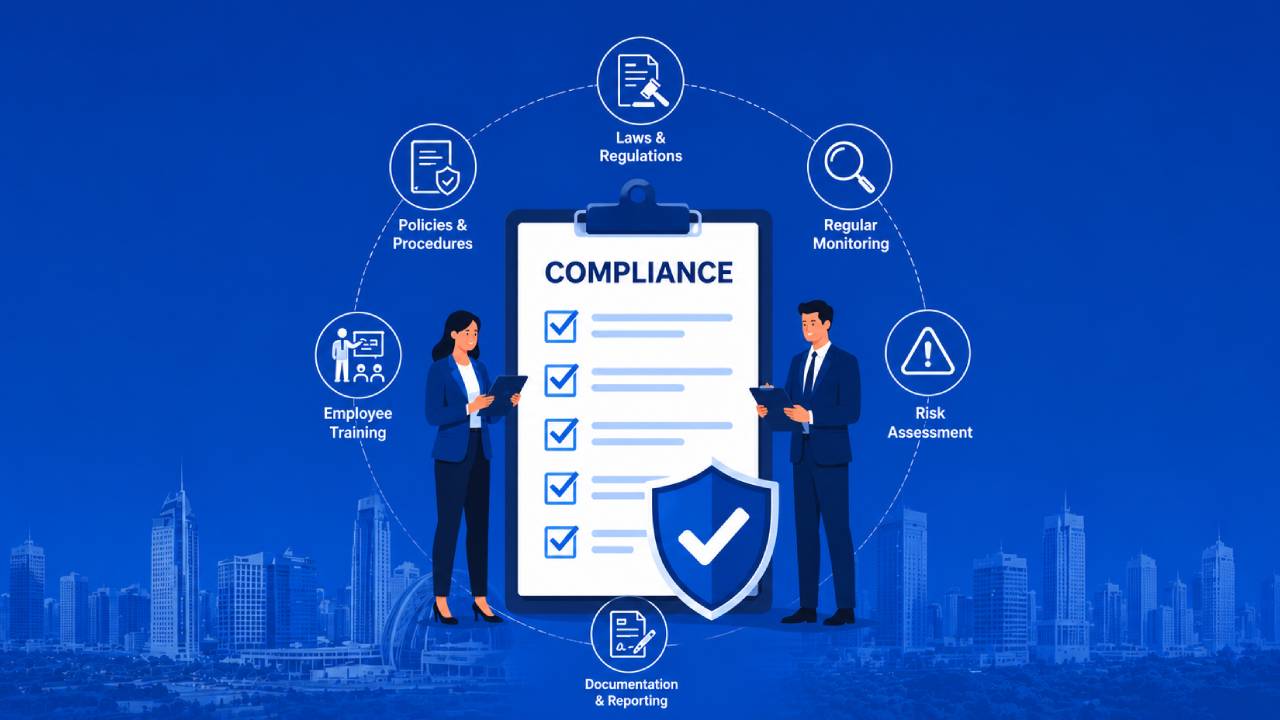
In today’s evolving regulatory landscape, workplace compliance in Noida has become a fundamental requirement for organisations across industries. With increasing scrutiny from authorities and rising awareness among employees, companies must ensure adherence to labour laws, safety regulations, and ethical standards. Compliance is no longer limited to documentation. It reflects organisational integrity and commitment to employee welfare.
Noida, as a major business hub in the National Capital Region, hosts a wide range of companies from startups to multinational corporations. Each organisation faces unique compliance challenges based on its size, sector, and workforce structure. This article explores how companies in Noida can build strong compliance frameworks while supporting sustainable growth.
Workplace Compliance in Noida in a Dynamic Business Environment
Workplace compliance in Noida requires a comprehensive approach. Organisations must align with multiple laws, including labour regulations, health and safety standards, and the Prevention of Sexual Harassment Act. Rapid urban growth and increasing workforce diversity make compliance more complex. Companies must manage employees from different cultural and professional backgrounds. This requires clear policies and consistent implementation. Regulatory authorities in Uttar Pradesh actively monitor compliance practices. Organisations must remain updated with changes in legal requirements to avoid penalties. A proactive approach helps businesses stay ahead of risks and maintain operational stability.
Understanding Key Compliance Requirements
To ensure effective compliance, organisations must first understand applicable laws and regulations. These include labour laws related to wages, working hours, employee benefits, and workplace safety. The Prevention of Sexual Harassment Act is particularly significant. It mandates formation of an Internal Committee, policy implementation, and regular training sessions. Non compliance can lead to serious legal consequences. Companies must also comply with employment contracts, data protection standards, and industry specific regulations. A clear understanding of these requirements forms the foundation of a strong compliance framework.
Importance of Structured Policies and Procedures
Well defined policies are essential for ensuring compliance. Organisations must create clear guidelines covering employee conduct, grievance redressal, and workplace safety. Policies should be accessible to all employees and regularly updated. Clear communication ensures employees understand expectations and responsibilities. Procedures for handling complaints must be transparent and fair. This builds trust and encourages employees to report issues without hesitation.
Role of Training and Awareness Programmes
Training plays a critical role in maintaining compliance. Employees must be aware of their rights and responsibilities within the organisation. Regular sessions conducted by a qualified Posh Trainer help reinforce understanding of workplace behaviour standards. These sessions also educate employees about reporting mechanisms and legal protections. Training should not be limited to onboarding. Continuous learning ensures employees remain informed about policy updates and regulatory changes.
Establishing Effective Internal Committees
An Internal Committee is a legal requirement under the POSH Act. Companies in Noida must ensure proper constitution of this committee with trained members. The committee should include an external expert to maintain impartiality. Members must be trained to handle complaints sensitively and confidentially. An effective committee ensures timely resolution of cases and reduces legal risks. It also strengthens employee confidence in organisational processes.
Maintaining Proper Documentation and Records
Documentation is a critical aspect of compliance. Organisations must maintain records of policies, training sessions, complaints, and committee proceedings. Accurate documentation ensures transparency and accountability. It also serves as evidence during audits or legal proceedings. Companies should adopt systematic record keeping practices. Digital tools can help streamline documentation and improve accessibility.
Addressing Compliance in Hybrid and Remote Work Settings
Modern workplaces often include remote and hybrid work models. This creates new challenges for compliance management. Companies must ensure policies extend to virtual work environments. Employees should understand acceptable conduct during online interactions. Monitoring compliance in remote settings requires clear communication and updated guidelines. Organisations must adapt their frameworks to reflect changing work patterns.
Role of External Legal Support
Many organisations benefit from engaging external experts for compliance management. Legal professionals provide guidance on complex regulatory requirements and help ensure adherence to laws. Working with a Posh law firm allows companies to access specialised expertise. These firms assist with policy drafting, audits, and handling sensitive cases. External support enhances compliance accuracy and reduces risk of legal errors. It also provides an objective perspective on organisational practices.
Building a Culture of Compliance and Accountability
Compliance is not only a legal obligation. It is also a cultural commitment. Organisations must promote values of respect, transparency, and accountability. Leadership plays a crucial role in shaping this culture. Managers must lead by example and enforce policies consistently. Open communication channels encourage employees to share concerns. A supportive environment ensures issues are addressed promptly and effectively.
Challenges Faced by Companies in Noida
Companies often encounter challenges such as lack of awareness, limited resources, and complex regulations. Smaller organisations may struggle with dedicated compliance teams. Rapid business growth can also lead to gaps in implementation. New employees may not receive adequate training, and policies may become outdated. Addressing these challenges requires continuous monitoring and improvement of compliance practices.
Strategies for Ensuring Long Term Compliance
Organisations can adopt several strategies to strengthen compliance frameworks. These include regular audits, policy reviews, and employee training programmes. Technology can support compliance management through automated tracking and reporting systems. This reduces manual effort and improves accuracy. Engaging external experts and investing in employee awareness initiatives further enhance compliance effectiveness. Consistency and commitment are key to long term success.
Conclusion
Workplace compliance in Noida is essential for building a safe, ethical, and legally sound organisation. Companies must go beyond basic requirements and adopt a proactive approach to compliance management. By understanding legal obligations, implementing structured policies, and investing in training, organisations can reduce risks and improve employee trust. External support and strong leadership further strengthen compliance efforts. In a competitive business environment, companies which prioritise compliance are better positioned for sustainable growth and long term success.