
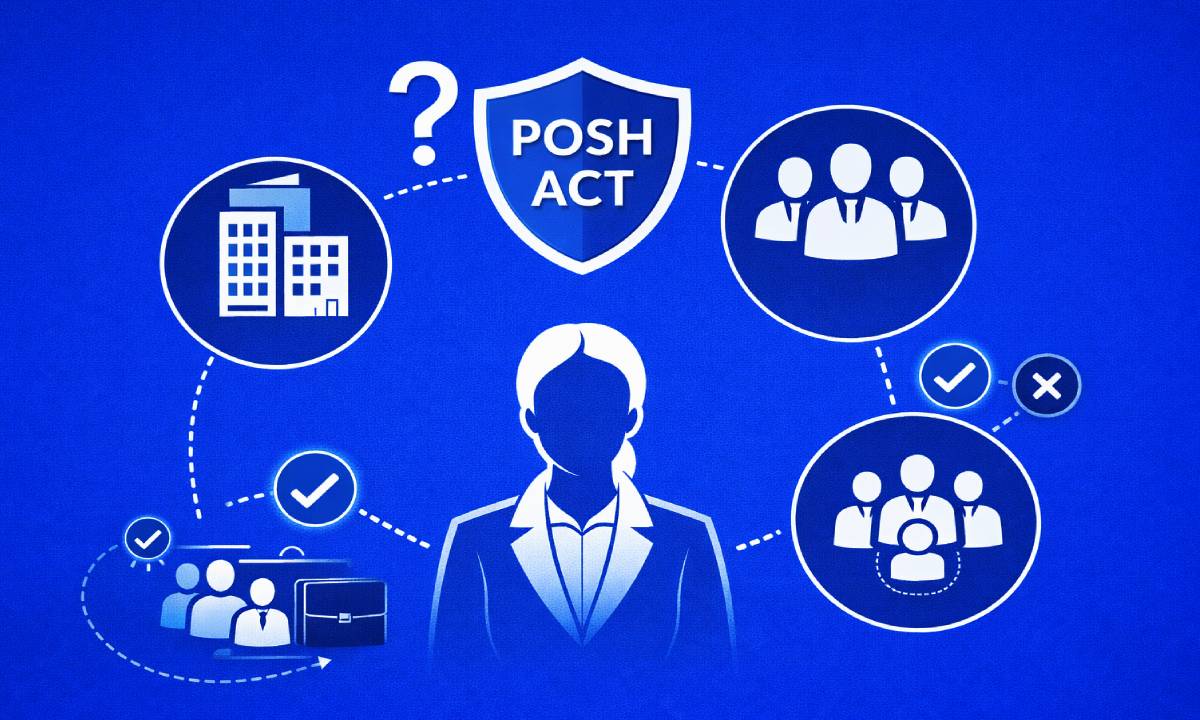
Understanding POSH Act applicability is one of the most critical yet misunderstood aspects of workplace compliance in India. Many organisations assume the law applies only to large corporations or formal office environments. In practice, the scope of the POSH Act is far wider and extends to diverse workplaces, employment relationships, and working arrangements.
The Sexual Harassment of Women at Workplace Act establishes a mandatory framework for prevention and redressal. Its applicability depends on statutory thresholds, the nature of the workplace, and the relationship between the parties involved. This article explains who must comply with the Act, how thresholds operate, and whether any exceptions exist under Indian law.
Purpose and Legislative Intent of the POSH Act
The POSH Act was enacted to give statutory force to the constitutional guarantee of equality and dignity at work. It seeks to ensure women can participate in the workforce without fear of harassment or retaliation. The law places responsibility squarely on employers rather than individual complainants. Compliance is not optional or discretionary. Applicability is interpreted broadly to achieve the protective purpose of the legislation. Courts consistently favour interpretations that advance workplace safety.
Understanding POSH Act Applicability
POSH Act applicability determines which organisations must adopt preventive measures and redressal mechanisms under the law. The Act applies to every workplace that meets statutory conditions, irrespective of industry, ownership, or profit orientation. Applicability depends on two primary factors. These are the existence of a workplace and the number of persons employed. Once these conditions are met, compliance obligations arise automatically. Employers cannot opt out by contract or policy choice.
Employee Threshold Under the POSH Act
The Act becomes applicable when an organisation employs ten or more persons. This threshold includes permanent employees, contractual workers, consultants, interns, and trainees. The nature of remuneration or duration of engagement does not alter applicability. Even short-term or project-based arrangements count towards the threshold. Employers must calculate workforce strength realistically rather than restrictively.
Types of Organisations Covered
The Act applies to private companies, public sector undertakings, government departments, educational institutions, hospitals, factories, non-profits, and trusts. Startups and early-stage ventures are also covered once they reach the employee threshold. Registration status under company or labour laws does not affect applicability. Functional reality determines coverage, not corporate form.
Meaning of Workplace Under the POSH Act
The definition of workplace under the Act is intentionally broad. It includes offices, factories, branches, and any place visited by employees during the course of employment. Workplace also includes transportation provided by the employer and locations where work-related activities occur. Remote work, virtual meetings, and digital communication platforms fall within this scope when used for official purposes. This expansive definition ensures protection beyond physical office premises.
Applicability to Remote and Hybrid Work Models
With changing work patterns, employers often question whether the Act applies to remote or hybrid work. The answer is yes. Harassment occurring through emails, messaging platforms, video calls, or work-related digital interactions is covered. Employers remain responsible for addressing complaints even when employees work from home. POSH Act applicability follows the employment relationship, not physical location.
Who Is Protected Under the POSH Act
Protection under the Act extends to all women at the workplace. This includes permanent employees, temporary staff, interns, consultants, and visitors. The Act does not require an employer-employee relationship in the traditional sense. Women interacting with the workplace ecosystem receive protection. This inclusive approach reflects the preventive objective of the law.
Applicability to Contract Labour and Third Parties
Employers are responsible for ensuring POSH compliance for contract workers and third-party staff present at the workplace. Principal employers cannot shift responsibility to contractors. Complaints involving third parties must still be addressed through the prescribed mechanism. Shared workplaces require coordinated compliance efforts.
Educational Institutions and POSH Act Applicability
Educational institutions fall squarely within the scope of the Act. Schools, colleges, universities, and training centres must comply once employee thresholds are met. The Act applies to faculty, administrative staff, and other employees. Student-related complaints may also fall within the scope depending on institutional arrangements. Institutions must adopt clear policies and reporting structures.
Applicability to Hospitals and Healthcare Institutions
Hospitals and healthcare facilities present unique compliance challenges due to patient interactions and shift-based work. The Act applies to doctors, nurses, support staff, and contractual workers. Complaints involving patients or attendants must be handled through the Internal Complaints Committee. Healthcare employers must ensure accessibility and confidentiality.
Small Establishments with Fewer Than Ten Employees
Organisations with fewer than ten employees are not required to constitute an Internal Complaints Committee. However, this does not mean the Act is inapplicable. In such cases, complaints are addressed by the Local Complaints Committee constituted by the District Officer. Employers must still cooperate with the process. Thresholds affect structure, not protection.
Role of Government Authorities in Applicability
District Officers play a key role in implementing the Act. They oversee Local Complaints Committees and monitor compliance within their jurisdiction. Guidance issued by the Ministry of Women and Child Development clarifies procedural and reporting obligations. Employers are expected to follow these directions closely. Local administrative practices may vary.
Are There Any Exceptions Under the POSH Act
The POSH Act does not provide broad exemptions based on industry or business size beyond the employee threshold. There are no exceptions for startups, family-run businesses, or informal establishments once the threshold is met. Good intentions or absence of complaints do not exempt employers. Applicability is statutory and non-negotiable.
Common Misunderstandings About POSH Act Applicability
A common misconception is that the Act applies only after a complaint is filed. In reality, compliance obligations arise proactively. Another misunderstanding is limiting applicability to permanent employees. Courts and authorities reject such narrow interpretations. Misunderstandings often lead to inadvertent non-compliance.
POSH Applicability and Employer Responsibilities
Once applicable, employers must adopt policies, constitute committees, conduct training, and maintain records. These obligations collectively form compliance under posh act frameworks within organisations. Authorities assess compliance holistically rather than in isolation. Partial compliance does not satisfy statutory requirements.
Applicability and Annual Reporting Obligations
Applicability also determines reporting duties. Employers covered under the Act must submit annual disclosures to the District Officer. These disclosures form part of POSH annual report filing processes used by authorities to track compliance trends across sectors. Non-reporting attracts regulatory scrutiny.
Judicial Approach to POSH Act Applicability
Courts adopt a purposive interpretation of the Act. Ambiguities are resolved in favour of extending protection rather than restricting it. Judicial precedents show limited tolerance for technical defences aimed at avoiding applicability. Substance prevails over form. Employers must therefore err on the side of inclusion.
Practical Steps to Assess Applicability
Organisations should periodically assess workforce strength, workplace definition, and engagement models. Expansion, mergers, or changes in staffing may trigger applicability. Regular compliance reviews help identify thresholds crossed. Proactive assessment reduces legal exposure. The Act protects women, but men are bound by its obligations and processes as respondents.
Conclusion
POSH Act applicability is intentionally broad and protective in nature. Employers must understand that thresholds and exceptions are limited, while obligations are extensive. Once applicable, compliance becomes a continuous legal responsibility rather than a reactive measure. A clear understanding of who must comply helps organisations implement preventive systems early, protect employee rights, and reduce long-term legal and reputational risk.