
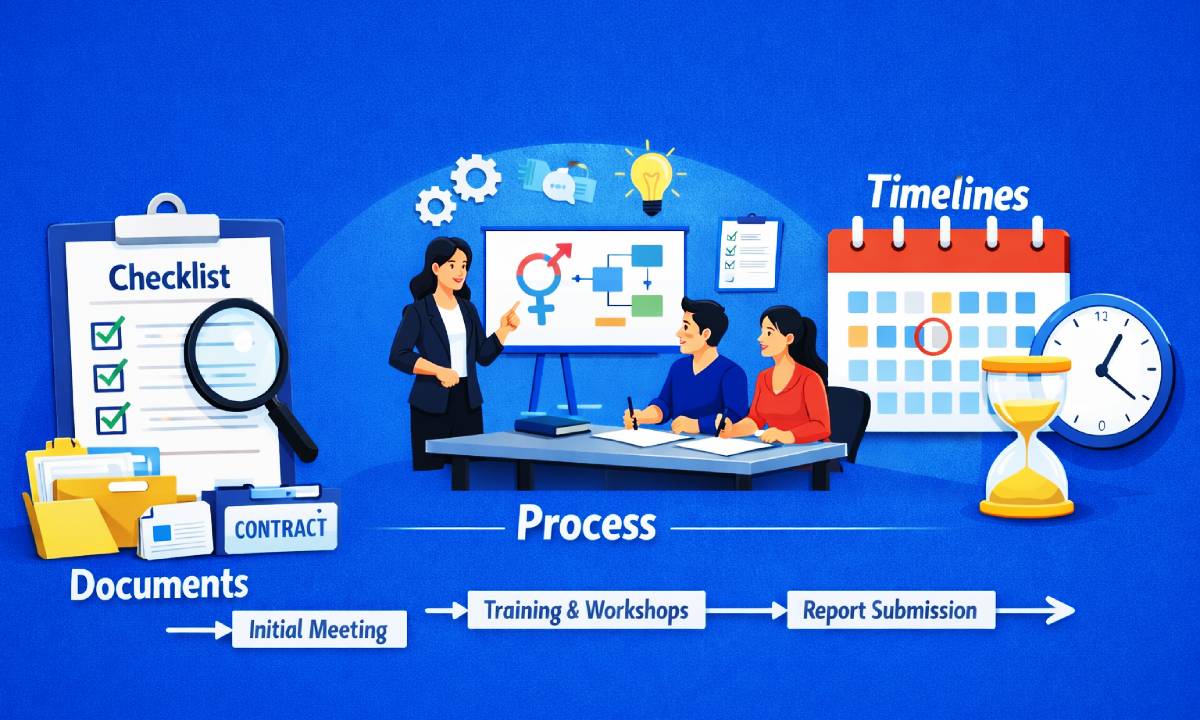
For organisations operating in India, engaging the right POSH consultant has become a critical compliance decision rather than a discretionary one. With rising regulatory scrutiny, judicial oversight, and employee awareness, employers increasingly rely on external expertise to strengthen Prevention of Sexual Harassment compliance. A well-structured checklist for engaging consultant support ensures organisations meet statutory duties while safeguarding fairness, credibility, and trust.
This article offers a comprehensive and practical guide to engaging POSH consultants in India. It covers documentation, evaluation process, timelines, and governance considerations, while aligning with legal expectations under the POSH Act and guidance issued by government authorities.
Checklist For Engaging Consultant Under Posh Law
The checklist for engaging consultant should begin with clarity of purpose. Organisations must first define why external POSH support is required. Common reasons include ICC training, External Member engagement, inquiry support, policy review, audits, or organisation wide training. Once scope is clear, the engagement process becomes structured and defensible. This clarity also helps employers demonstrate due diligence during inspections or disputes.
Understanding When a Posh Consultant Is Required
The POSH Act mandates employers to ensure effective implementation of compliance measures, including training and fair inquiry processes. While the law does not force engagement of consultants, courts and District Officers increasingly expect professional support where internal capability is limited.
Consultants are often engaged when organisations lack trained Internal Committee members, require an External Member with specialised expertise, face complex complaints, or undergo compliance audits. Employers expanding operations or adopting hybrid work models also seek consultants to update frameworks. Recognising this need early helps avoid rushed or reactive appointments.
Defining Scope of Work Before Engagement
A critical part of the checklist involves defining the scope of work in writing. Scope clarity protects both employer and consultant. Scope may include ICC constitution support, training for ICC and employees, inquiry facilitation, External Member services, policy drafting, compliance audits, or advisory support. Each function carries different legal and ethical responsibilities. Clear scope ensures appropriate selection and avoids conflicts of interest during later stages.
Verifying Professional Credentials and Experience
One of the most important steps in the checklist for engaging consultant support is verification of credentials. POSH consultants should demonstrate relevant legal knowledge, practical inquiry experience, and familiarity with Indian workplace dynamics.
Employers should review professional background, years of experience, training methodology, and exposure to handling complaints across sectors. Consultants engaged for inquiry support must understand principles of natural justice and confidentiality deeply. Organisations often prefer certified posh consultants in Delhi NCR due to access to experienced professionals familiar with regulatory expectations and court interpretations in the region.
Assessing Independence and Neutrality
Neutrality forms the foundation of effective POSH compliance. Consultants must operate independently from management influence and internal politics. Employers should assess whether the consultant can maintain objectivity, especially when handling sensitive complaints or senior management matters. Prior relationships with leadership or HR teams should be disclosed transparently. This step in the checklist protects investigation credibility and reduces risk of bias allegations.
Reviewing Training Methodology and Approach
Training quality varies significantly across consultants. Employers should evaluate whether training is role specific, scenario based, and aligned with legal requirements. Generic slide-based sessions often fail to meet judicial and regulatory expectations. Effective consultants use case discussions, mock inquiries, and interactive formats to build competence. For employee level engagement, programmes such as posh awareness training for employees should emphasise behaviour, reporting confidence, and prevention rather than legal jargon alone.
Ensuring Alignment with Government Guidance
Another essential item in the checklist involves alignment with government advisories and statutory guidance. Consultants should base frameworks on official guidance issued by authorities such as the Ministry of Women and Child Development and relevant state labour departments.
Employers should verify whether consultants reference current government notifications, advisories, and judicial trends. Alignment with public guidance enhances compliance credibility during inspections. Where possible, employers should ensure policies and training reflect information available on official government portals.
Documentation Required Before Engagement
Before finalising engagement, organisations should prepare internal documentation. This typically includes existing POSH policy, ICC constitution details, past training records, and compliance reports.
Providing accurate documents allows consultants to assess gaps and propose suitable solutions. It also prevents misalignment between advice and organisational reality. Documentation readiness reflects seriousness and professionalism during engagement.
Contractual Terms and Confidentiality Safeguards
Formalising engagement through written agreement forms a crucial checklist item. The agreement should define scope, timelines, deliverables, confidentiality obligations, and conflict management. Confidentiality clauses are especially important when consultants access sensitive complaint information or employee data. Data handling and record retention protocols should be clearly addressed. Clear contractual terms reduce disputes and protect organisational interests.
Timelines For Engaging Posh Consultants
Timing plays a significant role in effective engagement. Consultants engaged proactively provide better outcomes than those engaged during crisis. For training and audits, annual planning works best. For ICC constitution or External Member appointment, engagement should occur before complaints arise. For inquiry support, early engagement ensures procedural integrity from the start. A realistic timeline allows consultants to deliver quality outcomes without compromise.
Integration With Internal Committee and HR Teams
Consultants function best when integrated thoughtfully with internal teams. Employers should clarify communication channels and reporting structures. The consultant should support, not override, the ICC. HR teams should facilitate logistics without influencing substance. This balance preserves statutory roles and strengthens collaboration.
Avoiding Common Mistakes During Engagement
Many organisations engage consultants in haste without evaluating suitability. Others select based on cost alone, ignoring experience and neutrality. Some employers fail to segregate training and inquiry roles, creating conflict of interest. Others engage consultants without clear documentation, leading to confusion. An effective checklist anticipates and avoids these pitfalls.
Monitoring Performance and Outcomes
Engagement does not end with appointment. Employers should monitor consultant performance against agreed scope and timelines. Feedback from ICC members and employees helps assess effectiveness. Training outcomes, inquiry quality, and compliance improvements provide measurable indicators. Periodic review ensures sustained value from engagement.
Regulatory and Judicial Expectations Around Consultant Engagement
Courts increasingly recognise external consultant involvement as a positive compliance indicator, provided neutrality and competence are maintained. However poor consultant selection attracts criticism. Judicial observations often highlight inadequate training, flawed inquiry support, or superficial audits conducted by unqualified consultants. This reinforces the importance of a structured checklist for engaging consultant services under POSH.
Long Term Value of Structured Consultant Engagement
Engaging POSH consultants using a checklist driven approach supports long term compliance and culture. It reduces legal risk, strengthens employee trust, and enhances governance standards. Organisations move from reactive compliance to preventive management. This shift delivers value beyond statutory adherence.
Conclusion
A structured checklist for engaging consultant services under POSH law is no longer optional. It forms an essential governance tool for Indian employers navigating complex compliance expectations. By focusing on documentation, process clarity, timelines, and neutrality, organisations can engage consultants who add real value rather than superficial compliance. In an environment of rising scrutiny, thoughtful consultant engagement protects employees, strengthens systems, and reinforces organisational integrity.